

Showing posts with label Gillian Philip. Show all posts

Friday, 30 March 2012

FANTABULOUS FRIDAYS A-Z: B FOR BLUE MEN OF THE MINCH WITH GILLIAN PHILIP

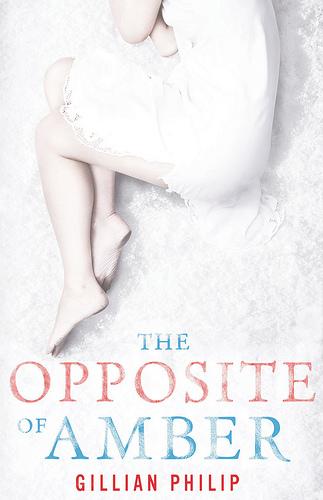
Scribble City Central's fifth Fantabulous Friday comes to us from Gillian Philip, author of the Rebel Angels series (and wrangler of badboy faeries Seth and Conal MacGregor, who have appeared elsewhere in these pages), as well as of The Opposite of Amber, Bad Faith and Crossing the Line.  She knows a thing or two about Scottish myths, does Gillian, and it's always a pleasure to have her here. 

The Blue Men are particular favourites of mine, having written about them in my own mythical journey round the tales of Britain, Coll the Storyteller's Tales of Enchantment.  This is how I described them:
"There were Great Ones of pure light who danced in the lands above the sky. Time did not pass for them, for there was no time.  Distance did not matter to them, for there was no distance...but one day Others appeared in their lands and began to dance too.  Instead of pure light, they were made of something different, and as their dancing grew stronger, their whirling forms began to cover the pure white skirts of the Great Ones with patterns of colour.  And the colour was blue..."
I'm always fascinated to see how other authors see the mythic beings I love, and Gillian's beautifully informative piece taught me a thing or two I didn't know. So without further ado, I shall hand you over to her.


B for Blue Men of the Minch
The Nimble Dancers of the Waves

GP: Water monsters are my absolute favourites, from kelpies to selkies (and I know selkies aren’t traditionally ‘monsters’, but mine are), so when Lucy asked me to write about the Blue Men of the Minch, who had been a little under my sonar till now, I rushed to my copy of John Gregorson Campbell’s The Gaelic Otherworld to investigate.

They’re very particular to a location, the Blue Men - na Fir Ghorma - living only in a strait between the island of Lewis and the Shiants, Sruth nam Fear Gorma - the stream of the Blue Men, aka the Current of Destruction. It’s here they lurk in the waters, looking to capsize boats for no other reason than mischief and pride (at least, unlike the more famous kelpies or water horses, they don’t have any plans to eat you). According to one tale, the only way to outwit them is to be better at rhyming couplets, as proved by a certain captain of a ship with snow-white sails, pursued by na Fear Ghorma:

Man of the black cap, what do you say
As your proud ship cleaves the brine?’

‘My speedy ship takes the shortest way
And I’ll follow you line by line.’

‘My men are eager, my men are ready
To drag you beneath the waves.’

‘My ship is speedy, my ship is steady,
If it sank it would wreck your caves.’
The Blue Men of the Minch, iPad illustration copyright (c) Lucy Coats

On hearing this, says the tale, the Blue chieftain gave up in disgust, realising he could never defeat a man with such aptitude for off-the-cuff doggerel.

It’s easy to see why the legend of the Blue Men arose. There are many treacherous waters in the Minch, but the channel where the Blue Men are said to lurk can be wild and vicious even when the rest of the sea is calm. They take the appearance of blue figures with streaming white hair who rise from the water, clutching at boats and dragging them down.

I took the title for my Rebel Angels series from an old Highland myth. The fallen angels, driven out of Paradise, scattered in three directions: some fell on the land and became the faeries, some fell into the sea to become selkies, and the rest were caught in the sky and remain there as the Northern Lights. But the myth has many variations, and of course in the north Hebrides the sea-bound angels became the Blue Men. Fair play to the north Hebrides.

Now, even a scheming fallen angel has to take a break sometimes, and there’s a popular story about one who was caught basking on the waves on an unusually calm day in the Minch. A boat passing by took the chance to capture one of the feared Blue Men; pulling him aboard, still asleep, they bound him tightly from head to foot. Two of his comrades, however, raced to save him. One called out, ‘Duncan will be one man’, and the other replied ‘Farquhar will be two.’ Their voices woke the captive, who shouted ‘Iain Mhor has no need of help!’ Leaping to his feet, he broke his bonds like a spider web and dived back into the water, leaving the fishermen with nothing but broken rope and the knowledge that Blue Men have perfectly ordinary names.

Unlike the Blue Men, I’m captivated. They will without doubt be making an appearance in a future book - thank you, Lucy - because I’m sure they’re well known both to my kelpies and to my Selkyr. And I can’t imagine my Sithe - Seth and Conal and the rest - would pass up a chance for a lively confrontation.

Not if I have anything to do with it...

There’s a poem about na Fear Ghorma that sums up their moods. Anyone who’s seen the Hebrides will recognise that the seas around them share their temper. It’s by Donald A. Mackenzie and I can’t resist reproducing it here:
When the tide is turning and the wind is fast asleep,
And not a wave is curling on the wide, blue deep,
Oh, the waters will be churning in the stream that never smiles,
Where the Blue Men are splashing round the Shiant Isles!
As the summer wind goes droning o’er the sun-bright seas,
And the Minch is all a-dazzle to the Hebrides,
They will skim along like salmon - you can see their shoulders gleam,
And the flashing of their fingers in the Blue Men’s stream.

But when the blast is raving and the wild tide races,
The Blue Men are breast-high with foam-grey faces;
They’ll plunge along with fury while they sweep the sea behind;
Oh, they’ll bellow o’er the billows and wail upon the wind.
And if my boat be storm-tossed and beating for the bay,
They’ll be howling and be growling as they drench it with their spray; -
For they’d like to heel it over to their laughter when it lists,
Or crack the keel behind them, or stave it with their fists.

Oh, weary on the Blue Men, their anger and their wiles!
The whole day long, the whole night long, they’re splashing round the isles;
They’ll follow every fisher - ah! They’ll haunt the fisher’s dream -
When billows toss, oh! Who would cross the Blue Men’s stream?

SCC: Who indeed?  Thank you so much, Gillian - that was a poem I didn't know, and I'm so glad to be introduced to it, as it sums up the Blue Men and their wild, storm-tossed natures exactly.

Next week: Madeline Miller, author of The Song of Achilles (SCC's Book of the Year for 2011) talks about C for Centaurs
Tuesday, 5 July 2011

The Mythic Faery Interview – Conal MacGregor, Smouldering Sithe Warrior

Gillian Philip's faery warrior, Conal MacGregor--what a treat that man is to talk to!  And today I'm sharing him with all of you, because I'm generous like that.... 

A little while ago, I was lucky enough to be given the very first sneak preview of Gillian's new novel, Bloodstone--the second in her 'Rebel Angels' series and the sequel to Firebrand, which The Times dubbed their 'best fantasy of 2010'.  Naturally I was sworn to secrecy about the contents--and I'm not going to put up any spoilers here.  Suffice to say that the action has moved on 400 years, into our own 21st century, there are new and exciting characters as well as old friends--and the fast-moving, viscerally real action is just as gripping as ever, if not more so.  The wickedly feral, amoral Seth (the 'red-hot faery boy' of my last Mythic Interview) tells the story, just as he did in the first book, and I'm as entranced as ever by what goes on inside his head (and by the reasons why he acts and thinks as he does). I still want to smack him half the time, and hug him (well, that's the polite way of putting it...) the rest of it.  But there is a new storyteller's voice too--Finn MacAngus, the stroppy, wild, rebellious Sithe girl who has no idea how powerful she really is.  I think you'll like her as much as I did--and I look forward to seeing more of her in later volumes.  All I will say now is that there's a treat coming for those of you who loved the first book--and some heart-stopping surprises too.

However,  it's neither Seth nor Finn who is the star of this interview.  Conal MacGregor is the quiet one--the 'good brother', and I feel that sometimes he's overlooked for that very reason--though he's just as..um...'huggable' as his younger brother. I also really wanted to know a bit more about what made him tick, and to get inside his head.  So Gillian very kindly agreed once more to act as amanuensis, and write down Conal's answers to my fearsomely intrusive and personal questions.  (Honestly?  I'm just really nosy! But Shh! Let's just pretend I'm an intrepid journo on assignment for Hello! for the moment....)

SCC: Conal, you  seem to be pretty perfect all round—selfless, noble, responsible, loyal, gentle, caring and all that (which might be annoying if you weren’t so obviously nice). Your rude brother calls you ‘the insufferable saint’. But everyone has a dark secret hidden in their character somewhere. What’s yours?
Uh... am I all those things?! Well, thanks, Lucy... It’s no surprise that Seth is rude about me; he’s pretty insolent about everyone and he’s easily wound up where I’m concerned. As for my dark half – well, I wish I were as perfect as the man you describe, but I’ve had my moments, and being under orders doesn’t excuse anything. If it’s a character fault you’re looking for, I know what Seth would say is my worst – the temper. I take a while to get riled, but when I do, I overreact. And Seth knows exactly which buttons to push. I'd better not say he can push my buttons anytime, had I?  *oops, too late*

SCC: You’ve had to make a lot of choices and hard decisions, both for yourself and your Clann. If you could go back and do one thing differently in your life so far, what would it be and why?
One thing, or many? There have been plenty of things I’d change, but if I had to choose one moment that could have made a difference, I’d have challenged Kate NicNiven earlier. Seth reckons I could have taken the crown from her way back, before the worst of it happened, and he might be right*. The trouble is, I didn’t want it; I only wanted autonomy over my own dun. But yes, I should have challenged her more strongly and a lot earlier. If I’d done that, it need never even have come to fighting.
* Ohhh! How I wish you had too.  She needs a good walloping, that one!

SCC: Your brother Seth is clearly very important to you—and you’ve made a lot of sacrifices for him. Tell us the thing about Seth that you most love—and the thing you most hate.
Ha! Yes, I love the little toe-rag. It’s a dirty job but somebody’s got to do it...

What do I love most? His cheek. He’ll insult anyone, even me, and sometimes it takes a while to realise he’s done it. It’s got him into all kinds of trouble, but there’s a kind of reckless bravado about it that echoes the way he fights.

What do I most hate? The way he won’t let himself be loved. The little git, he needs to bind to someone, but he’s what you might call a commitment-phobe. And it’s insane, because he has a lot to give, he just won’t let himself. He isn’t doing himself any favours there**.
** No, he isn't.  And I wish he'd learned that lesson too.  But emotional maturity is clearly going to take him several more centuries to get a grip on--if the annoying little cuss survives that long!

SCC: First you were a kind of father-figure to Seth, and now, in Bloodstone, you’re doing it all over again with Finn. You and Eili have had no children of your own (so far). I know it’s hard for the Sithe to have kids and that they’re incredibly important to you—so what would be the most vital piece of advice you’d want to pass on to your own bairn?

I know that’s a sore point with Eili, and I do feel guilty about it. One of these days, though, gods willing... anyway, what advice would I give? Don’t be scared to speak your mind to people you trust. Listen to the counsel of your friends and your lovers. And never turn your back on a smiling Lammyr.

I’d give myself a bit of advice, as well. I would never, but never lie to my child***. I’ve seen where that goes.
*** I'm so glad you said that.  Lying to your kids will always come back and bite you in the bum.  And what's the point?

SCC: I once asked Seth whether he saw himself as a kind of mythic hero—and he went all embarrassed on me (have you ever seen him blush? It’s rather sweet!). You yourself have actually been described as ‘heroic’, so how about you? Do you feel like a hero? Who would be the hero you most admire and relate to in any culture—and why?

Really? You made Seth blush? Brilliant - that I’d like to have seen. I can see why, though – what a question! If somebody has described me that way, it’s nice of them, but no. I don’t feel heroic. I feel as if I’d like to be heroic, but never quite get there. I have a lot of ground to make up, mistakes to correct, sins to expiate. Besides, I haven’t achieved what I need to achieve, not yet.

Which hero would I most admire? Tristan^. He was a warrior and a fantastic horseman, but he knew about love and loss. He wasn’t perfect, but he did his damnedest to do the right thing. And for the same reasons (minus the swordfighting) – Iseult too.
^ Tristan is the perfect choice for you--I can quite see why you'd pick him.  It seems to me that real heroes (ie you and Seth) are so because you don't have that kind of hubris which tells you that you're perfect.  The flaws and doubts make the man, I think.


SCC: The Queen of Elfland, The Faerie Queen, even Galadriel...we humans have so many tales of the ruler of your world. She’s always eerily beautiful, often cruel and human men seem find her irresistible. I hate to bring up Kate NicNiven, but why would anyone find her character attractive? You yourself say ‘she’d start a war for the fun of it on a dull weekend.’ She’s even more of a monster than the Lammyr, isn’t she? Why is she such a...well, ‘cow’ would be the politest term, I suppose! And why do all the Sithe put up with her?

It’s hard to explain, Lucy. If you can suspend your disbelief long enough, I could tell you that she’s...charming. And so beautiful, of course. And incredibly indulgent of her favourites.

Most of all, though, she knows how to win affection. She’ll say just the right thing, pay the right compliment, give the most apt favour at exactly the right moment. She knows better than anyone what you want or need – sometimes she uses witchcraft, sometimes it’s simple instinct – and she can give or withhold it as she likes. Most often she gives – so long as it suits her. She can make you dance to a tune you never knew you knew; she can play you like a fish on a hook, and persuade you no bait ever tasted better. It’s political nous, I suppose, and it’s better than any magic spell^^.
^^ Ah! So she's really a bedamned and thrice-bedamned politician.  That explains everything!

SCC: Talking of those human men—did you ever meet Thomas the Rhymer or Tam Linn? Why is music so important to the Sithe? And what would be the one modern song you absolutely have to have on your i-Pod?

I never met either of those two personally – before my time, I’m afraid – but they’re both still well-known by reputation. It seems Tam was a little humourless, but utterly devoted to Kate. Everyone knew she had him bewitched, and a lot of people lost a lot of bets when the full-mortal girl got him away from Kate. Thomas Rhymer was smarter, I reckon. He charmed Kate as much as she did him, and he flattered her, so when he asked to go home, she let him. You see? She rarely makes the kind of mistake she did with Tam Lin. And of course, he came back to her in the end, and died at a fine old age, still spouting those wacky prophecies that amused her so much.

I have met more than one other full-mortal, though, tempted across by Kate or by someone else. Lots of people fall for a full-mortal now and again, and want to show off. But the difference with Kate is that she has a nasty habit of, say, employing pipers and fiddlers for an evening’s entertainment, just when she knows the time’s going to warp. When they go back, they don’t survive longer than it takes to find out the date. She really is La Belle Dame Sans Merci. It’s cruel. Some Sithe think it’s funny; some don’t, but it’s damned difficult to say so to her face.

Speaking of full-mortal musicians, though, you’re right – we’re fond of music. You are too, though, aren’t you? After a hard day’s work or horse-training or fighting, there’s nothing better than a party. Even I know that, and you won’t catch me singing for love or money (unlike Seth, the show-off. But then he’s good).

As for my own iPod – I play Paolo Nutini a LOT – I never get tired of him – and I’m really fond of Brown-Eyed Girl by Van Morrison. Seth tells me I’m hopelessly unadventurous, but you should hear some of the shit he likes^^^.
^^^ Yep.  I'm certainly a music girl. But Paolo Nutini annoys the crap out of me, I'm afraid--and I'm not such a fan of Van the Man either--though I'll listen to him.  I fear some of my musical tastes may veer towards Seth's.  Eclectic, that's me! Hildegarde of Bingen one day, Lady Gaga or Seasick Steve the next!  

SCC: The Sithe are clearly excellent fighters, and enjoy a good brawl. You are one of the best with a sword. But if you didn’t have a sword, dagger or anything else long, sharp or pointy, what would you do? Do any of the Sithe practise any type of martial arts combat which involves no weapons? If not, shouldn’t you use all that time you’ve spent in the human world and start training your Clann so that you’ll have an advantage over your future enemies?

There’s no formal martial art, with special moves and rules or indeed any spiritual dimension – but oh, yes, we can fight barehanded. There’s a certain ability we have to kind of stay in the air and move, with nothing solid for leverage. It’s a mind thing. But we can’t do it for long. It’s not like we have those wee gossamer wings+, whatever anybody tells you.

Anyway, people tend to work out what works for them, depending on their size, speed, talents...and we’re nothing if not adaptable. Some Sithe fight pretty dirty. I could introduce you to a guy called Cuthag. Not one of my favourite people.
+ I'd give anything to see you and Seth in a pair of wee gossamer wings...! *has small fantasy moment*

SCC: Cù Chaorach, ‘The Sheepdog’, is your true name. While sheepdogs are wonderfully faithful and intelligent animals, they also tend to do what they’re told. How did you feel when you first found out what you were called? Did you secretly want to be something more glamorous like a wolf, or a bear or a stag? Do you think a sheepdog is really cut out to be a leader of men?

Don’t get me started. There’s a rumour I didn’t speak to anyone for a month when they found my name, but that isn’t quite true. I wasn’t very enamoured of it, though. And yes, you’ve got it: I wanted to be a wolf, or an eagle, or... hell, at least a stoat or a badger would be a proper predator.

But I’ve grown accustomed to it. I still don’t...quite...get it, but people say it suits me. Apparently I am sometimes annoyingly bossy and I-know-best++. The gods know, Eili tells me that often enough.
++ I guess dogs are descended from wolves--you can comfort yourself that you're a civilised wolf who can get people to do what he wants.  How's that for an idea?


SCC: Finally, I’m always wondering this myself (and am always changing my greedy mind), so I’m going to indulge myself and ask you what your last ever meal in the world would be, if you could choose. Mine currently involves eggs, chicken, truffles, purple sprouting broccoli, asparagus, mashed potato, a lot of cream and butter—and chocolate (obviously). Where would you eat your final supper? And with whom?

You know what, Lucy? I think I’ll join you...

But if you absolutely made me choose my own, I’d go for really fresh fish, straight out of the waters beside the dun. I’d like it grilled over an open fire, just with some butter and lemon and herbs. And artichoke hearts+++, because they’re so much fun to eat. And then I’ll have some rare steak, cooked over the same fire; and since this is a fantasy meal, I’ll take some proper modern Scottish chips with it, incredibly fatty and straight out of the local chip shop near Tornashee. But forget the deep-fried Mars bar afterwards – I’ll have Strathdon Blue cheese and plenty of whisky. Macallan, I think.
+++ Artichoke hearts--oh! I am SO stealing those for my last supper.  Mashed with plenty of butter and salt and pepper. Yum!

And of course, I’d eat it with Eili, and we’d sit on a hill overlooking the dun. And I know you said ‘final’ meal, but hey, you’d let us have some time with each other afterwards++++, wouldn’t you...? ++++ Says he, wistfully!  Yes, of course!  The night is yours and Eili's to do with as you will.  I'll be down the road with your dear brother...

Oh gods, now I’m sounding like Seth! Thanks for a terrific interview, Lucy. You’re an amazing lady and you’re welcome in my dun any time – once I get it back. I know you’d spin us some fabulous stories.

Thank you, Conal--and Gillian.  You've spun us all some fabulous answers, and I know many many readers will be even more desperate to read Bloodstone when it comes out on 19th August from Strident Publishing.  In fact, I think I'm away now to read it again myself!

Gillian on Twitter
Gillian on Facebook

Tuesday, 19 April 2011

British Books Challenge 2011 - The Opposite of Amber by Gillian Philip

Gillian Philip writes like a dream.  Whether she's turning her hand to a fantasy Scotland where exiled Sithe faeries roam the land or, as here, a modern YA crime novel with a challenging subject, she's a winner from any reader's point of view.

I knew how The Opposite of Amber was going to end from the first page of the book.  What I didn't know (and Gillian made me sweat and gnaw my nails to find out) was how she was going to get me there.  Have no doubts, this is not a novel which pulls its punches. It deals with a very difficult subject indeed--and it does it sensitively and with great compassion.  Ruby, the 'heroine' is a great character--memorably described by Gillian as 'spoiled voiceless'. I loved her--she is finely written, a truly rounded creation who reminded me a little of Laurie Halse Anderson's Melinda Sordino in Speak, (about which I have written elsewhere).


But it is her older sister, Jinn, who made me cry with the sad inevitability of her fate.  In Jinn, Gillian shows how a series of small wrong-headed decisions made in the name of love can tip a young, well-meaning, caring girl into the kind of low-level 'unprofessional' prostitution which exists on the streets of every town.  Yes. Every town. Yours too.  Jinn loves Nathan, her no-good drug addict boyfriend (and as an aside here, the way Gillian deals with Ruby's initial innocence and eventual realisation about the paraphernalia of crack cocaine is no less than brilliant).  She wants--as many women do in abusive relationships--to save him.  To do that, she gives up everything--her home, her relationship with her sister, her job--and eventually, the rights to her own body, leading to her fate at the hands of a killer (and no, I'm not going to tell you who it is or anything more about that at all!).  She tries so hard, so desperately to make things right because she is first and foremost a carer--an enabler--although the one person she doesn't look after is herself.  Of course, we, as onlookers, know that whatever she does will never be enough to save Nathan--because the only one who can save him is himself. This is a brave, wonderful novel which should not just be read by teenagers.  It should be read by everyone who cares about making sure that the many real-life girls like Jinn who find themselves in situations similar to this can get help and support and above all knowledge that they absolutely can have other choices in their lives. Buy it for yourself, buy it for others. A real 5* book.

Now, as always happens on Scribble City Central, Gillian has been kind enough to answer one of my famous and challenging

BURNING QUESTIONS
SCC: Where dead bodies are concerned, water plays an important part in both Bad Faith and The Opposite of Amber.  Why do you find the combination of running water and corpses such a fascinating and powerful image?" 

GP: Lucy, this is a googly! I hadn’t thought of it like that before, but now that you mention it...
Maybe it’s partly to do with where I live. I often say I get a lot of my ideas from landscape, and walking around in it, and if there’s one thing Scotland isn’t short of, it’s water. I always did love waterscapes, whether sea or river or loch. I spent huge amounts of my childhood sploshing around in it – lived for 15 years in Aberdeen, which has the most beautiful, vast and desolate beach, and the beach was the default place to go for laughs, games, romance, mooching over a lost love... I suppose that even in Crossing The Line, a crucial scene takes place in water (though not a death, for once!) when Nick goes midnight swimming with Orla – and yes, that was based on one of my own teenage habits...
It’s so fundamental, water, isn’t it? Life and death and this incredible irresistible power. Bits of Bad Faith were inspired by the Moray floods of a few years ago. We live at the top of a hill – lucky us – but the river Lossie is right at the bottom of it, and when the water starts to rise we can see and hear it. It’s spectacular and it’s terrifying. It seemed perfectly natural to put a body in that torrent – which can hide things, and quite unexpectedly reveal them...
But it can do the same when it’s calm and beautiful. Completely peaceful water can conceal things you wouldn’t want to see up close, which is what occurred to me when I was looking for a place to put a body in The Opposite of Amber. There’s a distillery pond I pass every morning on the school run, and it can be choppy and wild or it can be like a sheet of glass. One day I got out of the car for a closer look; the bank kind of slopes back beneath itself, and it struck me that anything could get caught under there...
All this notwithstanding, I must try to be more original! I was starting a new piece of work just yesterday, and I thought “must-not-soak-corpse...” Thanks for a fascinating question, Lucy!
SCC: Thanks for a fascinating answer--and I'm glad I bowled you a googly on this one.  Always good to make you consider something you'd never thought about!

Monday, 22 November 2010

The Mythic Faery Interview - Seth MacGregor, Red-Hot Faery Boy

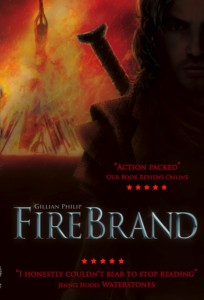
Since I interviewed Seth MacGregor's 'Boss', Gillian Philip, on Scribble City Central back in July, Seth has taken an unsuspecting world by storm.  I described the first part of Seth's memoirs, Firebrand (published by Strident and now in its second printing), as 'rare, new and infinitely exciting', and it seems I am not the only one to be so seduced.  Amanda Craig of The Times has made his book her Top Fantasy Novel of 2010 (Oh! How I agree with you, Amanda!), and Mary Hoffman of The Guardian has just described Seth as 'red-hot' and Firebrand as 'stark and brutal but with moments of heartbreaking beauty'. As of last night (Sunday) Firebrand was at #16 in Fantasy Books on Amazon and at #559 overall.  Cor! And just look at Seth on the cover--who wouldn't want a piece of THAT? *let's all take a moment for fanning purposes here*
Since Seth sneaked onto Twitter (quite against the express wishes of 'The Boss', but then that's our bad, disobedient, authority-defying faery boy all over), he and I have been having some...I shall use the word 'interesting' here (make of that what you will)...conversations. He's given at least two excellent interviews in other places, but for this one I wanted go with the Scribble City tradition by tapping into Seth's mythical faery heritage and trying to delve deeper into the intriguing world behind the Veil.  So without further ado, let's plunge into what I think is a fascinating conversation with the wickedly alluring (and appallingly flirty)...

                                           SETH MacGREGOR

So, Seth...let's begin with 'Faery tales’. That conjures up nice sparkly Thumbelina stuff for little children. But faery tales originate in a much deeper darker space, don’t they? Faery tales first began in the fiery heart of story where the old myths full of blood and ancient magic live. How far back into the mists of myth do your Sithe records go? Who are your lorekeepers? (Or do you not even keep records?)

Yes, blood and ancient magic. I like your style. Faery tales weren’t for children, not to begin with; they were the soap opera of the ancients, told for adults, full of truths and hard reality. And you and I know that however they’ve twisted and turned with the centuries, however they’ve changed, they began in that reality.

Our records go back as far as yours, I think... the further back you go, the more obscured they are by time. We keep the same stories, but like any myth or fairytale, we have our own take on them, our own filter. Full-mortals feature in our tales, but in not quite the same light as they do in yours. Your reputation with us is as mixed as ours with you. And like you, we have books, songs, oral history... there’s always a Shenachie to tell tales on a dark night when everyone’s had more than enough to drink*.
* That'll be pretty much every night, then?


Your brother, Conal is described as ‘heroic’, but you’ve been called ‘half-feral, a bastard boy full of hatred.’ I think that only shows the surly outer armoured skin you have presented to the world so far. There’s someone much more complex underneath all the angry posturing of your younger self, and I’d like to know more about how you would describe yourself nowadays, as compared to in your childhood. Do you, perhaps, see yourself as a kind of mythic hero (or indeed antihero) figure akin to all those butch Greek demigods like Achilles, or do you feel more comfortable closer to home, with heroes like Fionn mac Cumhaill and Cúchulainn—or do you feel like none of them?

I’m blushing** at the very thought of Achilles and Cuchulainn. Hell, I’m not the legendary type, though I love those heroes. They always seem so much larger than life, Lucy, and I’m just... life-sized. I know they had their human frailties, and it’s true I can throw a temper with the best of them, and have been known to sulk in my metaphorical tent... but consorting with gods isn’t for me. Fionn is a little different, isn’t he? He’s closer to us all, more man than demigod, and I like that he had wits as well as strength. More Odysseus than Achilles. I can also vouch for his existence, since Griogair knew him (Aonghas and Reultan named their daughter after him). Needless to say, I only heard the stories with the rest of the clann. My father never talked to me about him.

As for how I see myself nowadays? I’ve mellowed, or I think I have. I hope I’m smarter and wiser. The Boss says I still have a sizeable chip on my shoulder. Hah! She may know me pretty well, but even she doesn’t understand all my motives, not all the time.
** YES! I made Seth blush! This may be a first....


You and I share a love of animals, Seth.  If you had to choose two mythical creatures from any culture to go into battle with and to guard your left and right sides, who would they be, and why?

I have good friends, and good fighting comrades, but there’s no-one I trust more in battle than Branndair***. I know his head and he knows mine: we’re like extensions of each other. So if I was going to choose two mythical heroes instead, I’d take Bran and Sceolan, Fionn’s hounds, the ones with the hearts of men.
*** Branndair is Seth's wolf companion
 I trust you know the cautionary kelpie tale ‘Myself is Myself’+, Seth? It’s said in most of our old Scots legends that the waterhorses can shapeshift. Is this true of your own roan kelpie, or has something got skewed in the story as it travelled across the Veil? We mortals are easily confused about such things!
+ If any of you Lovely Blog Readers don't know it, it can be found in my Coll the Storyteller's Tales of Enchantment

You’re not the only ones. A lot of stories have got skewed and tangled. There are tales of shapeshifting creatures, and I don’t know if they’re true or not, but my horse isn’t a thing that can mutate. I’ve heard people say that water horses and kelpies are two different things, that kelpies are shapeshifting spirits; but we have always called our horses kelpies (and not all the Sithe can ride them). And then there’s the Brollachan, another shapeshifter that’s been known to take the form of a horse.

You ask me, I think tales shapeshift more easily than creatures. I’m not sure you have stories about the Lammyr, do you? Yet there are plenty of them over in your world, taking protégés all the time. Perhaps you notice them even less than you notice us.


In the shamanic tradition it is taught that everyone has a spirit animal (mine is a bear) with which they share affinities. Your true name, Murlainn, as well as symbolising the swift and deadly falcon spirit within you, set off all sorts of mythological echoes for me, being, of course, the same as the great Arthurian wizard of my own culture. Do you think that that Merlin too might have had Sithe blood, or even been a Sithe? Is he someone the Sithe know about?

A bear? That’s lovely. It suits you, because you’re beautiful and have a soft exterior+++, but you can be fierce. I like my true name well enough; it could have been worse. I’ve overheard bitchy comments in the dun before now, like the tosser who said he’d no idea there wasn’t a Gaelic word for ‘snake’. Breaking his nose was a satisfying moment.

And yes, I’ve had full-mortal friends who mistook my name for the wizard’s, and that has sometimes been helpful. I don’t doubt the man had Sithe blood, though I don’t think he was all Sithe: there’s definitely something else there. Didn’t he live backwards through time? Some of his abilities were undoubtedly Sithe, and he had plenty to do with us, or so I hear.

I don’t like the Sidhe of your BBC Merlin. They’re nothing like us. I spend Saturday nights shouting at the Boss’s TV. She gets cross and tells me to shut up, because all she wants to do is drool over Arthur and his knights^ – even though they’re terribly slow with a blade.
+++The less said about how Seth knows this, the better.
 ^You're very mean, Seth. 'The Boss' needs her downtime, just like the rest of us.  If she wants to drool over slow knights, let her (there's even a  free BBC picture below specially to distract her).  The rest of us will drool over slow nights with a certain faery...Oops! didn't mean to say that. Delete delete delete!

When I wrote my own book of Celtic myths and legends, my storyteller set off from the stone circle at Callanish on the the Isle of Lewis (Eilean Leodhas). There are so many stones and circles in Scotland, and they’re pretty much all associated with the Otherworld in some way—generally with mortals wandering through and then coming back tens or hundreds of years later (as you know, to your cost). You’ve told us that there are rings of ancient stones in the Sithe lands too. Do they equate exactly with the ones in the mortal landscape? Is the Veil thinner or somehow more penetrable around them—and if so, why?

Oh, I’m sure that’s true, that the Veil is thinner in those places. You can feel it, can’t you? And not just in the stone circles – there are other rocks, streams, caverns where the other world seems very close. I think of places like Colonsay, or Gigha, or Tomnahurich Hill in Inverness, or the older places of Edinburgh. And I know, for instance, that the Veil is denser and less penetrable around duns and fortresses, so why wouldn’t it work the other way?

Still, full-mortals can’t just wander through, say, a watergate – you’d need someone of Sithe blood with you. That’s why there are all those tales of musicians or knights or midwives enticed through by some unscrupulous Sithe with a few coins or a convincing story.

Some of those stones have equivalents in the full-mortal world, some don’t. I suppose it depends on whether they have been moved or destroyed, or preserved, and why they were built in the first place – some were put there as markers for weak places in the Veil, which makes sense when you think of their atmosphere.

There are a few stone circles in your world I have special affection for. The place my sons are buried, for one. And another where – well. That’s a story for another time^^.
^^You're very good--I had hoped to tempt you into some revelations, but you're too canny for that
.


You faeries are burdened with the hideous Lammyr (which, incidentally, creep the flesh off my bones). They’re obviously pretty hard to get rid of, and I certainly wouldn’t want to meet one on a dark or any other night. We mortals think about a lot of scary things in our spare time—including vampires and werewolves. Do the Sithe have any experience of those—and if you yourself met either one, how would you deal with them?

I suppose our closest equivalent to your seductive bloodsucking destroyers would be our dear Queen. And I’d like to say the Lammyr are undead creatures, and alien to the Sithe, but unfortunately they live and breathe and we are related. At some point in the past we have to accept responsibility for them. Maybe they creep the flesh off their own bones, who knows? It would explain the way they look.

But werewolves – now, we don’t have shapeshifters, but I know that the Sithe have always had a close relationship with our wolves, just as we have with the ravens. (And of course, wolves and ravens have always had a symbiotic relationship, too, even in your world.) Not that I’m fond of my stepmother’s ghastly bird, I might add; that thing’s got it in for me.

Perhaps the werewolf legends came about in the same way the centaur ones did? A full-mortal sees a Sithe and a wolf working together, just as the ancients saw a man on a horse, and.... ah, but on the other hand, there’s every chance werewolves and centaurs are as real as the Sithe, isn’t there? We don’t know everything of every world.^^^
^^^ Interesting.  So you admit there ARE other worlds....


In these modern times, we mortals have started seeing a lot of what are known to us as ‘urban faery tales’—stories about the Sithe, taken down by people probably not unlike The Boss. Many of them are set in the United States, and feature what seem to be some of your very distantly related kinfolk. Would you ever get on an aeroplane and travel across the Atlantic—or would you prefer to take a boat instead? Can you yourself go very far from the Veil—or can you get back to Sithe lands from anywhere in the mortal world?

Oh, I have travelled across the Atlantic, many times. I was in Antigua only recently #...but again, that’s a story for another time. To be honest, I prefer boats to planes, but I’m not as frightened of flying as the Boss is.

The Sithe certainly have kin in the United States, but then we have family everywhere – I’ve known Sithe from Germany, Belgium, Norway, Chile, South Africa and Pakistan. Some of those have different names, of course, but we’re all one race. Watergates exist in all countries; the Sithe world exists alongside yours in its entirety. I can go any distance from the Veil, any of us can – but I would never want to be too far from a watergate. You know how homesick I get.
# and there you go again with the enticing hints....


Now, finally (and this is a complete indulgence on my part), I just have to know the answer to this: 'The Boss' apparently has huge trouble controlling you and your urges, or so she tells me. You’re a kind of mega-flirt legend on Twitter already, and you have hordes of swooning female fans already (of whom I am obviously Most Important Number One, whoever might dispute that fact). So tell us, what would be your ideal night out with a lady in the mortal world of today (no expense spared)? Details, man, details!

All the details? Are you sure, Lucy? I’m not sure the Boss would allow that...!##

OK, but seriously... it would involve music, live music. And dancing. And down to the beach afterwards, to ride my horse together by moonlight and (probably) sober up. And then – oh, don’t talk to me about sand. It gets everywhere.

## I have a nasty feeling 'The Boss' has had her red censor pen out when she was transcribing this.  She has a very Puritan Streak when it comes to your extracurricular activities, does Gillian. *sigh*.
Well, that's all we have time for right now.  Thanks to the gorgeous Seth, (and to Gillian 'The Boss' Philip) for transcribing Seth's messy notes.  I'm just off for a cold shower and a lie down. 

You’re a wonderful interviewer as well as lovely, Lucy. Thank you!

Friday, 9 July 2010

Mythic Friday Interview: Number 15 - Gillian Philip

Gillian Philip and I have much in common, not least a deep and visceral love of Scottish myth and legend. (She's also a really superb teller of tales. When I read Gillian's scarily dystopian Bad Faith and her gritty teen novel Crossing the Line last year, I knew I was Onto A Good Thing, and I told her so.) What she says below (quoting Stuart McHardy) about the importance of knowing the myths of the land you live in is something I've been banging on about for years--and in part why I wrote Coll the Storyteller.  There is so much richness and complexity to be found in those Celtic tales (Skye and the Isles providing a particularly fertile vein)--and she's right, the places themselves tell stories without even trying.  I wrote the text of  my first published picturebook on the banks of the River Awe, and I'm convinced the spirit of the water (maybe even a kelpie) whispered it into my ear. 

Like Gillian, I was brought up in a household where the background of Scots superstition was part of everyday life--we had two rowan trees at the gate to prevent faeries and witches from getting in and bespelling us.  As I said last Tuesday over on An Awfully Big Blog Adventure, faeries are not always tiny sugar-pink winged entities from Disney--certainly the Sidhe of Scotland are old and dark and scary--and I find them endlessly fascinating.  Which brings me neatly to Gillian's new book--Firebrand--which is published on 27th August, and is the first of four.  I was lucky enough to wheedle an early copy, and my goodness I'm glad I did, because it's one of the best faerie fantasy books I've ever read.  No kidding--it's that amazing, and you can quote me.  What slightly niggles me about some of the current crop of  'modern faery tales' is that the faeries have been translated from their original Celtic homelands to the USA.  Nothing wrong with that--but sometimes it just doesn't sit quite right.  Gillian's book is not set in the USA, but in the Scotland of the 16th century where there's a whole otherworld of gloriously dangerous telepathic faeries just beyond the Veil.  In the dour and dirty mortal world, on the other hand, witches are burned, superstition is rife and 'different' is often fatal to your chances of living to a ripe old age.

Now, I am quite squeamish about burning people (I walked out of the film Elizabeth as the opening credits rolled).  It takes a lot to get me to read a book where burning witches is described in any sort of detail at all (maybe because I know that if I'd lived in another century, I too would have climbed that brushwood pyre and died in the flames).  Firebrand had me so tight in its grip by the end of the second page that I just didn't care when, later on in the book, Gillian was putting nightmare images of popping, crackling flesh into my head.  It is one of those (sadly unusual) books where I simply forgot I was reading--because I was so totally engaged with her richly created and beautifully crafted world. Her feral yet fiercely loyal Sithe hero, Seth, is a fully-imagined and fascinating character who I fell for immediately. He's a driven, volatile, knife-edge sort of boy--unflinching in his shield of outward fierce pride and yet (in his own head) so vulnerable and so unsure that he is loveable or redeemable in any way. His older brother Conal--opposite to Seth in almost every way on the surface--nearly broke my heart with the power of his generous, breath-stopping love.  The faerie queen, Kate NicNiven is suitably amoral, cruel--and a vicious political genius who knows just exactly when to exercise the power of a grand gesture. I could go on and on here, but I don't want to put up any spoilers, so I will just say this: go and buy the book when it comes--in fact, put in a pre-order right now. 
To sum up, it seems to me that in Firebrand Gillian has taken her own mythic heritage and made it into something rare, new and infinitely exciting.  I don't know how I will possess my soul in patience until the other three in the Rebel Angels series appear.  I seldom use bold capitals in posts to make a point, but just so you know, I REALLY REALLY LOVE THIS BOOK!  (Got it?)  Now it's time for me to welcome Gillian to Scribble City Central, which I do with great joy, and to hand you over to her.  I think you'll find her answers provide a fascinating and wide-ranging contribution to the Mythic Friday Interview series.  I know I did. 

1. Do you think that the retelling of Greek and other myths is important or relevant for the children of today? Why should they care about some “dry old stories” which come from ancient cultures they might never even have heard of?
There’s nothing dry about myths! Children need to discover them simply because they are such fabulous stories. And they are completely relevant, because the themes are eternal – heroism, loyalty, sacrifice, betrayal, vengeance, fatal arrogance: you name it, it’s there. Always in such a huge, dramatic context, too – the stakes and the consequences are terrifying, yet we always get to relate to the main characters as real, vulnerable, flawed human beings. You care about them, worry for them, mourn their fates - even if they are the sons and daughters of gods.

Besides the straightforward fact that they’re good stories, though, I think it’s important for children to know mythology, especially their own. Stuart McHardy, who writes about Scottish myths and folklore, quotes an old saying: ‘Gin ye dinnae ken whaur ye’ve been, hou can ye tell whaur ye’re gangin?’ Or, if you don’t know where you’ve been, how can you tell where you’re going? Myths are born out of landscape and history, and they’re a way of understanding your own home.

2. What age were you when you came across your first myth or myths? Tell us how you felt then about the myths you first discovered. Did you love them or hate them? Did they scare you, excite you—or were you indifferent? What kind of myths were they? Greek? Norse? Native American? Celtic? Or from another culture entirely? Were they in a book you read? Or did you hear them as oral storytelling from someone else?
I’ve cudgelled my brains about this, Lucy, but – I simply can’t remember. I do remember they were Greek myths, and my father introduced me to them, but which ones, or in which books, I just don’t know. They would have been books I borrowed out of his study, which was a lovely place full of old books that smelt of dust. I was fascinated by all things Greek, and he had a copy of Teach Yourself Greek from which I learned the alphabet to no apparent purpose except that, along with the myths, it keeps my husband happy on Saturdays when I can fill gaps in the Telegraph crossword. I soaked up myths from the movies, too – I loved all those films like Jason & the Argonauts and Clash of the Titans, with their fantastic Ray Harryhausen monsters.

I loved myths, always. That didn’t mean I wasn’t scared, or that I didn’t think some of them were just appalling in the way they turned out. I was always deeply offended on Orpheus’s behalf – that was just not fair! He only looked back the once. As for Persephone – her poor mother! The gods always seemed terribly cruel or indifferent, but the mortals never stopped trying to get the better of the deal. I liked that.

I don’t remember either where I first heard Scottish myths about selkies and kelpies and faeries. They were just there, in the background. We knew it wasn’t a good idea to cut down rowans, and it was a bad sign if you saw your own doppelganger. They were the kind of stories we told to scare each other, along with absurd urban myths.

I think I especially love Scottish myths because there seems such a fragile line between them and reality. They’re this close to visible, this close to tangible. Since I think of myself as very boring and rational, this is kind of embarrassing, but it’s true. I’ve a friend who spends a lot of time on the island of Gigha, and she says there are distinct spots where you can feel the closeness of the otherworld; I feel the same about Colonsay. And you only have to look at the hill Schiehallion in the right weather conditions and you know fine there must be Sidhe around up there.

On the other hand, Scotland’s historical tales can be just as wild and outlandish as its myths. There’s a fabulous story in my husband’s clan, the Keppoch MacDonalds, about the clan bard taking revenge on treacherous relatives who had murdered the true chief. Having killed seven of them, he sent their heads to the Privy Council in Edinburgh – but washed them in a well by Loch Oich on the way. There’s still a sculpture there of the heads, and it’s called the Well of the Seven Heads. You see what I mean about a fine line between myth and history!

I have to say that when my children were smaller, I shamelessly used kelpies to frighten them around lochs. There’s such a thing as being too confident around water, and if you know there’s a big horse in there waiting to eat you….

3. Looking back, what is your favourite myth of all time, from any culture? And why would you choose it?
Oh, such a tough choice. I’d have to go for the Iliad, though, because it has everything. When I was an expat and had far too much time on my hands, I decided it was something I should read and I assumed it would be a bit of a chore. But a couple of chapters in, I was hooked. The characters are so human – even the gods are flawed and jealous and fractious – and the themes are timeless. There’s everything from intimate family tragedy and lovers’ quarrels, to epic battlefield scenes. Nothing’s predictable, no one side is in the right; I found myself one minute cheering the Greeks on and the next siding wholeheartedly with the Trojans. I love Achilles and good old Pallas Athene; I love Hector and Priam and Patroclus and of course Odysseus. Oh dear, you shouldn’t have got me started….

4. Who is your most hated mythical hero or heroine, and what made you feel that way about them?This was another difficult one – it’s easy to get angry with many of them, but I find them hard to hate. But I’ll have to agree with Nicola Morgan here and say Hera. The sour old boot – always throwing a spanner in the works and ruining everyone’s plans. Mind you, she did have to put up with a lot from Zeus.

5. Is there a mythical beast you are particularly fond of? If so, which one?
I’m especially fond of kelpies (despite using them to scare my children) and they feature quite prominently in my fantasy books. That water-monster thing is such an atavistic, instinctive terror, they somehow seem very real. Out on the moors, if I’m near water, I’ve often expected to turn and see a temptingly gorgeous horse at my back.

They’re sly, they’re violent and murderous and wild, yet they’re terribly beautiful. In my fiction I’ve tried to use them in a way that puts them on my heroes’ side without compromising their savage, dangerous nature.

6. How have myths had an influence on your writing life, if at all?
A huge amount! Myths seem to creep into my books whether I like it or not; maybe that’s because those old stories are so universal and so timeless, it’s hard not to return to them. I didn’t set out to reference lots of myths in Bad Faith, for instance, yet the Orpheus myth and the Maenads crept in.

And in my Rebel Angels fantasy series I have played fast and loose with Scottish myth and legend. I always wanted to write about faeries and kelpies, witches and ancient warriors. I said earlier that myths are firmly rooted in landscape – well, the Scottish landscape has practically shouted stories at me ever since I can remember. I can’t pass a hill or a loch without ‘seeing’ something happening there. I had to write about it eventually – but what I especially love about myths is that they are so adaptable. We all own them, and we can retell them in our own way. (Not that that’s always a good thing – I give you the movie abomination that is TROY.)

But I had great fun playing with mythic characters, and inventing some of my own. I made my Sithe human – why not? – but a little differently evolved, so that they’re telepathic. (I also made them Sithe instead of Sidhe – I wanted Sith but that was a bit too Star Wars.) My villain, the Sithe queen, was based on a witch from Scottish history, Kate MacNiven; I’ve given a MacLeod clan chief a cameo because the MacLeods of Dunvegan were said to own a faery flag given to them in return for a favour they did for the ‘People of Peace’. Rowans are said to be sacred to the faeries, so I’ve made rowanwood the only thing that can wholly block their telepathy. I’ve used odd details like the rumour that kelpies don’t like liver (I can relate to that) because there was a certain water-weed that got dark and wet and swollen, and people used to assume, when it floated ashore, that a kelpie had left someone’s liver behind. It’s those little details I love...!

7. If you could choose to be the demigod child of any one mythical god or goddess from any culture, which one would it be? Which power would you like to inherit from them—and what would you do with it?
If you can fix it for me, Lucy, I’d like one of the Tuatha de Danaan for a parent, so I can have some faery blood. I’d rather like to have the powers I’ve given the Sithe in my books – speed, telepathy, healing – all except for the Second Sight one of them is cursed with. I’d hate that. If I had to choose just one power, I’ll go for the ability to tame and ride water horses! Thanks – now, if you could manage to sort that by a week on Wednesday…. Thanks for inviting me Lucy – this has been terrific fun! xxxxx

More about Gillian:
Gillian Philip was born in Glasgow, lived for 12 years in Barbados and now lives in the north of Scotland with her husband, nine-year-old twins, one labrador, two sociopathic cats, and four nervous fish.  She has been writing all her life, but has also worked as a record store assistant, theatre usherette, barmaid, sales rep, political assistant, radio presenter, typesetter, and as a singer in an Irish bar in Barbados. In 2001, when her children were born and she moved back to Scotland, she became a full-time writer of Young Adult fiction. Her books include Bad Faith, Crossing The Line, Firebrand (first of four in the Rebel Angels series) and (for Hothouse Fiction) the Darke Academy teen horror series.
Gillian's website is at http://gillianphilip.com/ and she contributes to a children’s authors’ blog at http://awfullybigblogadventure.blogspot.com/;
Gillian tweets by the name of @Gillian_Philip;  she was recently kidnapped by fiendish monsters and will be blogging with the other captives at http://trappedbymonsters.com/;
Gillian's Facebook page is HERE.
 
Blog Design by Imagination Designs all images from the Before the First Snow kit by Lorie Davison