

Showing posts with label Mary Hoffman. Show all posts

Friday, 12 October 2012

FANTABULOUS FRIDAYS A-Z: Q FOR QUESTING BEAST WITH MARY HOFFMAN


Scribble City Central's thirty-third Fantabulous Friday comes from the marvellous Mary Hoffman, author of the bestselling Amazing Grace picture-books, and also of one of my favourite YA historical fantasy series - Stravaganza.  I've followed Luciano and Arianna's story since the beginning, and found it immeasurably satisfying to have lots of ends tied up in the latest (and, sadly, possibly last) book, City of Swords.  Mary has created the Talian world of the Stravaganti (time-travellers to a parallel Italy) with loving care, and her passion for Italy shows in the small but meticulous details hidden within her writing, not only in these books, but also in her excellent eponymous novel about Michelangelo's David.  What I particularly liked, not only in City of Swords, but in all the other books in the series, is the way Mary deftly interweaves the historical derring-do with some very modern teenage problems.  In City of Swords, it's self-harm, something I've seen addressed in a few YA books lately. Mary tackles it head-on, but in a sensitive way which, I hope, would encourage teenagers to talk about this very real problem. I think it's important that YA literature can sometimes act as a sort of catalyst in this way.


As far as I am concerned, Mary is the fount of all knowledge, being the person I would ask for answers about any esoteric question - especially about anything to do with Arthurian matters.  I often turn to her  story collection Women of Camelot for knotty problems of reference vis a vis the ladies of Arthur's Court.  The Arthurian beastie she writes about here is one I love, though I first came across its fewmets in TH White's Once and Future King rather than Malory.  It appears as the comical dwarf-steed Gladysant in my own Hootcat Hill, but its roots lie far back in literary history.  So, over to Mary to tell you all about:

Q for Questing Beast
Hound-bellied Glatyssaunte
Photo credit: Jess Barber

MH:   Here is a range of definitions from the Oxford Guide to Arthurian Literature and Legend by Alan Lupack (OUP 2005):
“a snow white beast, smaller than a fox, and which is terrified by the yelping of a packs of twelve dogs in her belly”
“a devil born to the daughter of King Hipomenes, who had intercourse with a devil” after her brother rejected her incestuous advances.
“the head of a serpent, the body of a leopard, the buttocks of a lion, and the feet of a hart.”
The source for the first descriptions is Perlesvaus, also known as The High History of the Grail, written in the early 13th century in France. The second, from the Post-Vulgate Queste del Saint Graal, dates from roughly the same date and place but is much more about a spiritual quest than it is an adventure story.

The third is from Sir Thomas Malory’s Morte d’Arthur and is where I first met the Beast (see below). It is from a century and a half later than the earlier sources and for me this is where the Questing Beast comes into her (or his) own.

In my first year of studying English at Cambridge, my Tutor for Medieval Literature set me an essay topic: “Malory, the least intelligent author ever to become a classic.” That was the way they rolled back in the ‘60s. I bought my precious copy of The Works of Thomas Malory, in the Vinaver edition, for twenty-five shillings, at a time when I had only thirty shillings a week to live on, and it rapidly became my Desert Island Book, the one I’d save first if my house was on fire.
The Vinaver Edition of Malory

I now have three other editions, including the beautiful Aubrey Beardsley facsimile, but it’s my chubby little green Vinaver with Roy Morgan’s woodcut on the front that I reach for first when I need a Malory fix. You see that essay didn’t quite work out as Professor Spearing thought it would. Instead of finding Malory “unintelligent” or in any way overrated by posterity, I fell deeply in love.

Not the place here to count the ways, but I stumbled upon the Questing Beast in Book 1, chapter  19:
“And as [Arthur] sat so, him thought he heard a noise of hounds, to the sum of thirty. And with that the king saw coming toward him the strangest beast that ever he saw or heard of; so the beast went to the well and drank, and the noise was in the beast's belly like unto the questing of thirty couple hounds; but all the while the beast drank there was no noise in the beast's belly: and therewith the beast departed with a great noise, whereof the king had great marvel. And so he was in a great thought, and therewith he fell asleep.
Right so there came a knight afoot unto Arthur and said, Knight full of thought and sleepy, tell me if thou sawest a strange beast pass this way. Such one saw I, said King Arthur, that is past two mile; what would ye with the beast? said Arthur. Sir, I have followed that beast long time, and killed mine horse, so would God I had another to follow my quest. Right so came one with the king's horse, and when the knight saw the horse, he prayed the king to give him the horse: for I have followed this quest this twelvemonth, and either I shall achieve him, or bleed of the best blood of my body. Pellinore, that time king, followed the Questing Beast, and after his death Sir Palamides followed it.” [Caxton text]

This is very early in the story, before Excalibur,  before  Guinevere, before the Round Table and the Company of Knights at Camelot. Thereafter it recurs like a glinting thread in a tapestry, leading first King Pellinore and then Sir Palomides a merry dance.
The Beardsley Beast
The Beast has a name, in various spellings of which my favourite is Glatyssaunte. It comes from an Old French word for “barking”, which is what the “questing” also means: the noise that hounds make when they scent their prey. So it could have featured under G, but I thought Lucy might be short of Qs in her bestiary.

So it is a beast both “questing” and the object of Pellinore’s and Palomides’ Quest. For me it represents the “idée fixe,” the object that cannot be resisted. And all writers of fiction are familiar with that idea! Maybe that’s why the Beast crops up in so many later versions too? (In Spenser’s Faerie Queene it is the Blatant Beast, but that’s not a comment on its immodesty, merely another version of the “glatisant” or “questing’ noise in its belly).

He, she or it (for the Beast is as elusive as to its gender as it is in appearance) crops up in many more recent stories, from  William Morris’s poem Palomydes' Quest of 1855 to Alasteir Crowley’s The High History of Good Sir Palamedes the Saracen Knight and of His Following of the Questing Beast of 1911 and T.H. White’s Once and Future King (1958).

When I told my husband that I was writing about the Questing Beast, he mentioned casually that he had cited it in a paper he had written about Charles Williams for the Anglo-American Literary Review, Vll. Duly impressed, I looked it up and it is in Vol 20 (2003) Metaphysical and Romantic in the Taliessin Poems by Stephen Barber.

Williams wrote a poem “The Coming of Palomides,” in Taliessin Through Logres (OUP 1938) at the end of which, when the knight has been smitten by the sight of Iseult, come the lines:
“I heard the squeak of the questing beast,
where it scratched itself in the blank between
the queen’s substance and the queen.”

Isn’t that fabulous? The very definition of an “idée fixe” is in that “blank between/ the queen’s substance and the queen.” (And the very definition of unrequited love, another mythical beast, to be filed under U).

The commentator (a.k.a. my husband) says “Williams makes Palomides’s endless futile quest for this beast, a standard theme in Arthurian writing, embody his obsessive and futile passion for Iseult.”

Some have speculated that the Beast coming where it does in Malory and trailing its associations of incestuous love, after Arthur has unwittingly slept with his half-sister Morgause and fathered the fatal Sir Mordred, symbolises forbidden combinations. I like that idea: that our most obsessive quests might be for the Thing that Should not be.

But actually I just rather love the Questing Beast (which for me is female). I love the idea of the prey which is constantly quested after and may not be caught, the idea that the bond between hunter and hunted remains pure only when not consummated.

Lucy asked whether I might write about her one day. Well, now that she has cropped up in the TV Merlin, (which Lucy enjoys but I cannot bring myself to watch), I’m not so sure! But I love the idea of writing about Broceliande, the enchanted forest and I’m sure that Glatyssaunte would lurk somewhere in its depths.

SCC: Thank you so much, Mary.  As always, I am in awe of your erudition.  I'm now reminded of how to spell Glatyssaunte properly, and you've inspired me to go and dig out my own Malory and have a browse through the forest of Broceliande.

You can find out more about Mary in the following places:
www.maryhoffman.co.uk
www.stravaganza.co.uk
http://bookmavenmary.blogspot.com
http://the-history-girls.blogspot.com
Twitter: @MARYMHOFFMAN
Mary is also  on Facebook at: Mary Hoffman Author Page; Official Stravaganza Page; History Girls Page and Luciano and Arianna Page.

If you'd like to buy any of Mary's books mentioned in this piece, you can do so HERE

Next Week: Sarwat Chadda goes head to head with the fearsome R for Ravana.  Swords at the ready, people!
Thursday, 4 August 2011

Mars and Venus - 'The David Blog Tour': Guest Post by Mary Hoffman

I first encountered Mary Hoffman's David back in February this year, when Mary was kind enough to send me a very early proof.  Last year I 'met' the man himself, in sculptural form, when I visited Florence. To me at that time he was, though utterly beautiful and mesmerising to look at, still only a cold, marble statue in 3D.  Now, after reading Mary's marvellous book, he exists inside my head, 3D still, but reincarnated as a living, breathing, gloriously beddable Renaissance boy called Gabriele.  To be honest with you, dear readers, I could go on about this book for hours.  Not only is it a marvellously plotted story, taking known historical facts and interweaving them with nuggets of possibility into a seamless whole, but it also rekindled my long-buried interest in art history.  It made me look at Michelangelo's sculpture in a whole new light, made me, as a writer, think as well about the hidden things behind all art--the myriad histories lost in time and waiting for a teller to give them life. 

Mary herself is a magical teller and teaser-out of hidden histories. When I interviewed her for Mslexia magazine earlier in the year, she told me that David was the perfect story for her as a writer of historical fiction. 

Mary and David

"There were some incontrovertible facts, but absolutely nothing known for the crucial part of it.  Nobody knows who the model was--or even if there was a model. That was the ideal scenario, because you've got your framework and the ability to bring historical characters alive--but then you can get in and tell your human story any way you damn well like!"

I can tell you that Mary's 'any way you damn well like' is pretty damn good as far as I'm concerned.  I consider this to be her best book yet (and her previous books have all been fabulous). Buy it. Read it. Read it again. Trust me on this one!

And now, that's quite enough from me.  I'm going to hand you over to Mary herself, who, this being the marvellously mythic Scribble City Central, has chosen to talk about Mars and Venus for the very last stop on her David Blog Tour.  Welcome to SCC, Mary!

The David Blog Tour: Final Day - Mary Hoffman talks about Mars and Venus

“Men are from Mars, Women from Venus” – so says the book title.

I think that’s pretty much nonsense. But certainly back in Renaissance Florence women didn’t go to war as soldiers. And you wouldn’t have found many men being hands-on dads either. In other words, the gender roles were pretty clearly divided. We are talking about over five hundred years ago, when women could not vote or hang on to their own property if they married.

Aristocratic women might have had some say in the ordering of their lives but marrying for dynastic reasons rather than love was common. Ordinary people of both sexes had hard lives in the Middle Ages and Renaissance and life expectancy was not all that long.

So the story of Gabriele and his many loves should be viewed in the context of that background. He poses as artist’s model for the painter Leone, as Hercules, Mars, Bacchus and Theseus – all  mythological characters or legendary heroes. Like David, he is well suited to representing these figures, at least physically.

But he doesn’t feel heroic. He feel that he has betrayed Grazia  by accepting her help and not loving her enough, the way Theseus betrayed Ariadne by allowing her to help him kill the Minotaur and then abandoning her.. But as he tells Leone, he has posed for Bacchus too – the god who rescues Ariadne so, in a sense, Grazia, who also poses for Leone sometimes, ends up with him anyway.

‘I think all of us are part Theseus, part Bacchus,’ [Leone] said.
‘And part Minotaur?’ I asked. ‘That’s what I’ve been thinking.’

‘You are very young, Gabriele,’ he said. ‘Don’t be too hard on yourself. We all make some mistakes as we are growing up.’

They are talking about the difficulty, as they see it, for men, to behave well in their love relationships with women. And it comes to them naturally to express this in terms of mythology, not just because of the subjects of Leone’s current paintings, but because everyone knew those stories then from the many representations of them in art.

And it is complicated for Gabriele by the fact that women – and men – throw themselves at him all the time! He means to behave well to all of them but it just too inexperienced and unsophisticated to handle the situations in which he finds himself. Thinking of himself as Mars – or any of the other classical figures – is a way of distancing himself from the actuality of relationship with a flesh and blood woman of his own time. And of telling himself that he is not the only male who has ever got himself into a pickle with females.

The god Mars has always struck me as rather stupid. And Venus was pretty dumb too! He did his he-man warlike stuff and she went around being beautiful. Apollo and Hermes (Mercury), Artemis and Athene (Diana and Minerva) are much more interesting, don’t you think?

Now if the book was “Men are from Mercury, Women from ...”  But there is no other planet named after a goddess, is there? Perhaps that tells us something too.

Fascinating and illuminating stuff, Mary--with much mythic food for thought too.  Thank you so much for visiting Scribble City Central.

You can find out more about Mary at the sites listed below:
www.bookmavenmary.blogspot.com

Monday, 22 November 2010

The Mythic Faery Interview - Seth MacGregor, Red-Hot Faery Boy

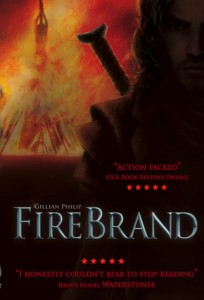
Since I interviewed Seth MacGregor's 'Boss', Gillian Philip, on Scribble City Central back in July, Seth has taken an unsuspecting world by storm.  I described the first part of Seth's memoirs, Firebrand (published by Strident and now in its second printing), as 'rare, new and infinitely exciting', and it seems I am not the only one to be so seduced.  Amanda Craig of The Times has made his book her Top Fantasy Novel of 2010 (Oh! How I agree with you, Amanda!), and Mary Hoffman of The Guardian has just described Seth as 'red-hot' and Firebrand as 'stark and brutal but with moments of heartbreaking beauty'. As of last night (Sunday) Firebrand was at #16 in Fantasy Books on Amazon and at #559 overall.  Cor! And just look at Seth on the cover--who wouldn't want a piece of THAT? *let's all take a moment for fanning purposes here*
Since Seth sneaked onto Twitter (quite against the express wishes of 'The Boss', but then that's our bad, disobedient, authority-defying faery boy all over), he and I have been having some...I shall use the word 'interesting' here (make of that what you will)...conversations. He's given at least two excellent interviews in other places, but for this one I wanted go with the Scribble City tradition by tapping into Seth's mythical faery heritage and trying to delve deeper into the intriguing world behind the Veil.  So without further ado, let's plunge into what I think is a fascinating conversation with the wickedly alluring (and appallingly flirty)...

                                           SETH MacGREGOR

So, Seth...let's begin with 'Faery tales’. That conjures up nice sparkly Thumbelina stuff for little children. But faery tales originate in a much deeper darker space, don’t they? Faery tales first began in the fiery heart of story where the old myths full of blood and ancient magic live. How far back into the mists of myth do your Sithe records go? Who are your lorekeepers? (Or do you not even keep records?)

Yes, blood and ancient magic. I like your style. Faery tales weren’t for children, not to begin with; they were the soap opera of the ancients, told for adults, full of truths and hard reality. And you and I know that however they’ve twisted and turned with the centuries, however they’ve changed, they began in that reality.

Our records go back as far as yours, I think... the further back you go, the more obscured they are by time. We keep the same stories, but like any myth or fairytale, we have our own take on them, our own filter. Full-mortals feature in our tales, but in not quite the same light as they do in yours. Your reputation with us is as mixed as ours with you. And like you, we have books, songs, oral history... there’s always a Shenachie to tell tales on a dark night when everyone’s had more than enough to drink*.
* That'll be pretty much every night, then?


Your brother, Conal is described as ‘heroic’, but you’ve been called ‘half-feral, a bastard boy full of hatred.’ I think that only shows the surly outer armoured skin you have presented to the world so far. There’s someone much more complex underneath all the angry posturing of your younger self, and I’d like to know more about how you would describe yourself nowadays, as compared to in your childhood. Do you, perhaps, see yourself as a kind of mythic hero (or indeed antihero) figure akin to all those butch Greek demigods like Achilles, or do you feel more comfortable closer to home, with heroes like Fionn mac Cumhaill and Cúchulainn—or do you feel like none of them?

I’m blushing** at the very thought of Achilles and Cuchulainn. Hell, I’m not the legendary type, though I love those heroes. They always seem so much larger than life, Lucy, and I’m just... life-sized. I know they had their human frailties, and it’s true I can throw a temper with the best of them, and have been known to sulk in my metaphorical tent... but consorting with gods isn’t for me. Fionn is a little different, isn’t he? He’s closer to us all, more man than demigod, and I like that he had wits as well as strength. More Odysseus than Achilles. I can also vouch for his existence, since Griogair knew him (Aonghas and Reultan named their daughter after him). Needless to say, I only heard the stories with the rest of the clann. My father never talked to me about him.

As for how I see myself nowadays? I’ve mellowed, or I think I have. I hope I’m smarter and wiser. The Boss says I still have a sizeable chip on my shoulder. Hah! She may know me pretty well, but even she doesn’t understand all my motives, not all the time.
** YES! I made Seth blush! This may be a first....


You and I share a love of animals, Seth.  If you had to choose two mythical creatures from any culture to go into battle with and to guard your left and right sides, who would they be, and why?

I have good friends, and good fighting comrades, but there’s no-one I trust more in battle than Branndair***. I know his head and he knows mine: we’re like extensions of each other. So if I was going to choose two mythical heroes instead, I’d take Bran and Sceolan, Fionn’s hounds, the ones with the hearts of men.
*** Branndair is Seth's wolf companion
 I trust you know the cautionary kelpie tale ‘Myself is Myself’+, Seth? It’s said in most of our old Scots legends that the waterhorses can shapeshift. Is this true of your own roan kelpie, or has something got skewed in the story as it travelled across the Veil? We mortals are easily confused about such things!
+ If any of you Lovely Blog Readers don't know it, it can be found in my Coll the Storyteller's Tales of Enchantment

You’re not the only ones. A lot of stories have got skewed and tangled. There are tales of shapeshifting creatures, and I don’t know if they’re true or not, but my horse isn’t a thing that can mutate. I’ve heard people say that water horses and kelpies are two different things, that kelpies are shapeshifting spirits; but we have always called our horses kelpies (and not all the Sithe can ride them). And then there’s the Brollachan, another shapeshifter that’s been known to take the form of a horse.

You ask me, I think tales shapeshift more easily than creatures. I’m not sure you have stories about the Lammyr, do you? Yet there are plenty of them over in your world, taking protégés all the time. Perhaps you notice them even less than you notice us.


In the shamanic tradition it is taught that everyone has a spirit animal (mine is a bear) with which they share affinities. Your true name, Murlainn, as well as symbolising the swift and deadly falcon spirit within you, set off all sorts of mythological echoes for me, being, of course, the same as the great Arthurian wizard of my own culture. Do you think that that Merlin too might have had Sithe blood, or even been a Sithe? Is he someone the Sithe know about?

A bear? That’s lovely. It suits you, because you’re beautiful and have a soft exterior+++, but you can be fierce. I like my true name well enough; it could have been worse. I’ve overheard bitchy comments in the dun before now, like the tosser who said he’d no idea there wasn’t a Gaelic word for ‘snake’. Breaking his nose was a satisfying moment.

And yes, I’ve had full-mortal friends who mistook my name for the wizard’s, and that has sometimes been helpful. I don’t doubt the man had Sithe blood, though I don’t think he was all Sithe: there’s definitely something else there. Didn’t he live backwards through time? Some of his abilities were undoubtedly Sithe, and he had plenty to do with us, or so I hear.

I don’t like the Sidhe of your BBC Merlin. They’re nothing like us. I spend Saturday nights shouting at the Boss’s TV. She gets cross and tells me to shut up, because all she wants to do is drool over Arthur and his knights^ – even though they’re terribly slow with a blade.
+++The less said about how Seth knows this, the better.
 ^You're very mean, Seth. 'The Boss' needs her downtime, just like the rest of us.  If she wants to drool over slow knights, let her (there's even a  free BBC picture below specially to distract her).  The rest of us will drool over slow nights with a certain faery...Oops! didn't mean to say that. Delete delete delete!

When I wrote my own book of Celtic myths and legends, my storyteller set off from the stone circle at Callanish on the the Isle of Lewis (Eilean Leodhas). There are so many stones and circles in Scotland, and they’re pretty much all associated with the Otherworld in some way—generally with mortals wandering through and then coming back tens or hundreds of years later (as you know, to your cost). You’ve told us that there are rings of ancient stones in the Sithe lands too. Do they equate exactly with the ones in the mortal landscape? Is the Veil thinner or somehow more penetrable around them—and if so, why?

Oh, I’m sure that’s true, that the Veil is thinner in those places. You can feel it, can’t you? And not just in the stone circles – there are other rocks, streams, caverns where the other world seems very close. I think of places like Colonsay, or Gigha, or Tomnahurich Hill in Inverness, or the older places of Edinburgh. And I know, for instance, that the Veil is denser and less penetrable around duns and fortresses, so why wouldn’t it work the other way?

Still, full-mortals can’t just wander through, say, a watergate – you’d need someone of Sithe blood with you. That’s why there are all those tales of musicians or knights or midwives enticed through by some unscrupulous Sithe with a few coins or a convincing story.

Some of those stones have equivalents in the full-mortal world, some don’t. I suppose it depends on whether they have been moved or destroyed, or preserved, and why they were built in the first place – some were put there as markers for weak places in the Veil, which makes sense when you think of their atmosphere.

There are a few stone circles in your world I have special affection for. The place my sons are buried, for one. And another where – well. That’s a story for another time^^.
^^You're very good--I had hoped to tempt you into some revelations, but you're too canny for that
.


You faeries are burdened with the hideous Lammyr (which, incidentally, creep the flesh off my bones). They’re obviously pretty hard to get rid of, and I certainly wouldn’t want to meet one on a dark or any other night. We mortals think about a lot of scary things in our spare time—including vampires and werewolves. Do the Sithe have any experience of those—and if you yourself met either one, how would you deal with them?

I suppose our closest equivalent to your seductive bloodsucking destroyers would be our dear Queen. And I’d like to say the Lammyr are undead creatures, and alien to the Sithe, but unfortunately they live and breathe and we are related. At some point in the past we have to accept responsibility for them. Maybe they creep the flesh off their own bones, who knows? It would explain the way they look.

But werewolves – now, we don’t have shapeshifters, but I know that the Sithe have always had a close relationship with our wolves, just as we have with the ravens. (And of course, wolves and ravens have always had a symbiotic relationship, too, even in your world.) Not that I’m fond of my stepmother’s ghastly bird, I might add; that thing’s got it in for me.

Perhaps the werewolf legends came about in the same way the centaur ones did? A full-mortal sees a Sithe and a wolf working together, just as the ancients saw a man on a horse, and.... ah, but on the other hand, there’s every chance werewolves and centaurs are as real as the Sithe, isn’t there? We don’t know everything of every world.^^^
^^^ Interesting.  So you admit there ARE other worlds....


In these modern times, we mortals have started seeing a lot of what are known to us as ‘urban faery tales’—stories about the Sithe, taken down by people probably not unlike The Boss. Many of them are set in the United States, and feature what seem to be some of your very distantly related kinfolk. Would you ever get on an aeroplane and travel across the Atlantic—or would you prefer to take a boat instead? Can you yourself go very far from the Veil—or can you get back to Sithe lands from anywhere in the mortal world?

Oh, I have travelled across the Atlantic, many times. I was in Antigua only recently #...but again, that’s a story for another time. To be honest, I prefer boats to planes, but I’m not as frightened of flying as the Boss is.

The Sithe certainly have kin in the United States, but then we have family everywhere – I’ve known Sithe from Germany, Belgium, Norway, Chile, South Africa and Pakistan. Some of those have different names, of course, but we’re all one race. Watergates exist in all countries; the Sithe world exists alongside yours in its entirety. I can go any distance from the Veil, any of us can – but I would never want to be too far from a watergate. You know how homesick I get.
# and there you go again with the enticing hints....


Now, finally (and this is a complete indulgence on my part), I just have to know the answer to this: 'The Boss' apparently has huge trouble controlling you and your urges, or so she tells me. You’re a kind of mega-flirt legend on Twitter already, and you have hordes of swooning female fans already (of whom I am obviously Most Important Number One, whoever might dispute that fact). So tell us, what would be your ideal night out with a lady in the mortal world of today (no expense spared)? Details, man, details!

All the details? Are you sure, Lucy? I’m not sure the Boss would allow that...!##

OK, but seriously... it would involve music, live music. And dancing. And down to the beach afterwards, to ride my horse together by moonlight and (probably) sober up. And then – oh, don’t talk to me about sand. It gets everywhere.

## I have a nasty feeling 'The Boss' has had her red censor pen out when she was transcribing this.  She has a very Puritan Streak when it comes to your extracurricular activities, does Gillian. *sigh*.
Well, that's all we have time for right now.  Thanks to the gorgeous Seth, (and to Gillian 'The Boss' Philip) for transcribing Seth's messy notes.  I'm just off for a cold shower and a lie down. 

You’re a wonderful interviewer as well as lovely, Lucy. Thank you!

Friday, 9 April 2010

Mythic Interview Friday: Number 2 - Mary Hoffman

Time for the second Mythic Interview Friday--and you're in for another treat. It's strange to think that I first met Mary Hoffman nearly 30 years ago when I was the young and enthusiastic editor of the first Yellow Banana Books.  I worked on Beware, Princess which she wrote for the series (and which, if I recall correctly, was the first book illustrated by one Chris Riddell, then fresh out of art college). In those days, I trembled in the face of Mary's towering reputation as author, critic and journalist (I still do), but we have got to know each other well over the years, and I am proud to call her my friend.  Mary's Stravaganza sequence has become one of my 'must-read' recommendations for any teenager who likes a fabulous mix of adventure, romance and magic.  I recently read the latest--City of Ships--which came out in March 2010 and is just as wonderful as its predecessors.  If you haven't come across these books yet, go and buy them at once! Now, enough from me--here are Mary's answers to my seven mythically-minded questions. I love how different they are from Caroline Lawrence's set last Friday. That's what this interviewing business is all about.

1. Do you think that the retelling of myths is important or relevant for the children of today? Why should they care about some “dry old stories” which come from ancient or forgotten cultures they might never even have heard of?
It’s absolutely vital! And what’s with this “dry” nonsense? These are stories as juicy as any you are likely to find.  I once had a most successful session with quite disaffected secondary students in a rough East End school, when I just walked up and down the classroom telling them Greek myths and legends. They then wrote their own contemporary versions and had Phaeton stealing his dad’s Merc, for instance. They agreed that the sort of thing you came across in the myths could be found any day of the week in soaps like EastEnders – doubtful parentage, incest, adultery and what they called “bad parenting”!

2. What age were you when you came across your first myth or myths? Tell us how you felt then about the myths you first discovered. Did you love them or hate them? Did they scare you, excite you—or were you indifferent? What kind of myths were they? Greek? Norse? Native American? Celtic? Or from another culture entirely? Were they in a book you read? Or did you hear them as oral storytelling from someone else?
I was really quite small because I remember my next sister up, who is seven years older than me, reading me the story of Baldur the Beautiful from the Norse myths. It's one of the central Norse myths. Baldur the god (roughly equivalent to Apollo) has been rendered almost entirely invulnerable to weapons because his mother has made all the plants and minerals in the world promise never to harm him. But of course there is one she has forgotten (as in the legend of Achilles). Hodur, Baldur’s blind brother is sad because he can’t join in the hurling of weapons at Baldur in the hall of the gods. The trickster god, Loki, who is always left out of everything in Valhalla, fashions Hodur a spear out of mistletoe wood (of course that was the plant their mother had left out) and helps him to aim it. Baldur is killed instantly. And Hodur is devastated.  It made a huge impression on me, hard to describe – a feeling of mystery, grandeur and tragedy which I find irresistible to this day.

3. Looking back, what is your favourite myth of all time, from any culture? And why would you choose it?
Well, the one above is a strong candidate! But really I love all such stories except the Mayan and Aztec ones, which feel too alien to this European. Of the Greek ones I think Persephone being kidnapped by Hades and kept under the earth for six months of the year, because she ate six pomegranate seeds.

4. Who is your most loved mythical hero or heroine, and what made you feel that way about them?
I’ve always loved Artemis, even though she is the goddess of the hunt and I am a vegetarian. I love her association with the moon. All moon goddesses appeal actually – Isis and Astarte too.

5. Is there a mythical beast you are particularly fond of? If so, which one?
My first published book, White Magic, was about a unicorn, so I think I have to choose that. Not a soppy, Disneyfied beast skipping about through flowers and rainbows but a sacred animal who can detoxify polluted waters; we need him now in our tainted world.

6. How have myths had an influence on your writing, if at all?
Myths and legends and folk and fairy tales and Bible stories all influence everything I write and think every day of my life.

7. Finally, if you could choose to be the demigod child of any one mythical god or goddess, which one would it be? Which power would you like to inherit from them—and what would you do with it?
I wouldn’t mind having the Dagda for my father! He was a Celtic god who doesn’t really have an equivalent in the Greek or Norse pantheons. He was the god of hospitality, which is important to me, and he had a magic cauldron – my kind of guy. If I had been able to inherit a power from him I should like it to have been endless expansive hospitality.

More about Mary:
Mary Hoffman is a published writer of over 90 books, mainly for children and teenagers, including bestsellers like the Grace series and the aforementioned Stravaganza sequence for older readers. With her 'critic hat' on, she founded and ran the review journal, Armadillo, for ten years and reviews regularly for the national press. She is also on an international "Comitato Scientifico" in Florence and writes articles about the UK children's publishing scene for Liber magazine. Mary Hoffman won a scholarship to James Allen’s Girls’ School in Dulwich, which she describes as “an exercise in punctuation in itself.” From there she went to the University of Cambridge to study English at Newnham College and then spent two years studying Linguistics at University College London. Since 1998 she has been an Honorary Fellow of the Library Association for her work with children and schools. She worked at the Open University for nearly five years, contributing to courses for teachers on reading, language and children’s literature. For eighteen years she was Reading Consultant to BBC Schools TV’s Look and Read series and wrote the teaching scripts. Mary lives in Oxfordshire. 

Mary's website is HERE, her blog is HERE, her Facebook Fanpage is HERE, and she tweets as @MARYMHOFFMAN HERE

Sunday, 7 March 2010

A Writing 101 Production: Part 8 - Stuff That Helps Me Write (Not a Rule in Sight)

There's been a lot of bookie chat lately about Writing Rules for Fiction (yes, that blasted Grauniad piece again). Me? I'm not good with rules. 'See a rule, want to break it' is my rebellious creed. Well, not the biggies--the taboos and the law-busting stuff. Obviously. I am a good and law-abiding citizen apart from the occasional parking ticket. But the small ones, the bureaucratic ones, the idiotic non-daisy picking elf-and-safe-tea ones--all these new Elmore Leonard-inspired writing ones? Give me a hammer, and a map saying 'Opposite Way - Over Here'. For me, as far as writing is concerned, I'd like to misquote the Buddha for a moment: There is no Rule for Writing. Writing IS the Rule. Just do it, I say, and also, (like Nigel Molesworth), DoWn wiv RooLs.

'Writing Rule' to me says didactic and overbearing and I know best, so do it my way. I'm not going to apologise for feeling like that--it's not ungrateful to all those well-meaning rule-writer writers, it's just the grumpy way I am about being told what to do. However, the less aggressive-sounding helpful hint is different. 'Helpful' to me says friendly and hey, look, no pressure--only if you feel like it and it's useful to you personally. Helpful hints are what I try to give in these Writing 101s.  But I'm not going to give you any HH's today. Instead (if you have no objections) I'm going to share with you STUFF WOT HELPS ME WRITE. It's personal to me. No one else has to take any of this stuff as a rule set in stone. In fact, I'll be crabbitly and cross with you if you do, and possibly bite you into the bargain. Please--just enjoy the weirdness and eccentricity. And have a laugh at me. I won't mind at all--laughter is good for the soul (and I think that's one the Buddha would agree with. Also Molesworth, who would no doubt think about giggling fish.).  So--in no particular order....

  1. My Ergonomic All-singing All-dancing Office Chair. It's covered in soft red suedey stuff, and has a sheepskin for me to sit on. When you've had five operations on your spine, like me, sitting comfortably to write is not just advisable, it's a total neccessity. (The sheepskin is not a neccessity--it's the one my kids used to lie on when they were babies. I just like it--and the connection to them.)
  2.  My View. From my desk I look out on green fields and willow trees and a river. It's a rural panorama which changes minute-to-minute with the English weather, and it inspires me. Don't think it's all a Wordsworthian daffodil idyll, though. Skip to No 3 NOW if you are of a delicate disposition. I get gritty realism when the tups come in with the ewes in the autumn. My Facebook friends are sometimes offended with the graphic nature of my status updates on Mr Green Ram, Mr Red Ram, Mr Blue Ram, their sexual prowess, and the multi-coloured state of their adoring sheepladies' bottoms. (Don't worry, that's now it for the sheep bits--on to the dog...). 
  3. My Deskdog. Yes, I have a deskdog. She lies either on the windowsill behind the computer, or between the screen and the keyboard. When I am shouting at my characters or weeping when the plot has gone AWOL, she moans sympathetically and wags her tail. She is a great comfort unto me and usually helps me to climb the next writing hurdle. If not, we jack it all in and go for a walk. Or have biscuits. Which brings me to....
  4. My Earl Grey Tea and Strawberry-and-Cream Shortcake. The small pleasures in life are important. It doesn't matter whether things have gone well--I've reached a word goal, finished a chapter--or whether things have gone badly--the computer has crashed, I've lost all my work, my novel has wandered lonely as a cloud into realms I wot not of--in every eventuality I treat myself to the above. They make the world a better place for me, regardless of writing success or failure.
  5. My Pens and My Paper. Sounds old-fashioned and redundant, I know. But sometimes my brain needs me to write down stuff in the way that Shakespeare and Donne had to. And Dickens. And Trollope. And sometimes I'm on a train or somewhere without my laptop or other means of expression.  I use Pilot V7 Hi-Techpoint 0.7 pens in black, and sometimes in green or purple. (I hasten to say that I NEVER write letters with the green. That would make me into Mrs Creepy Poison Pen Person. Which I'm not.)  I use the ubiquitous lined Moleskine notebooks in black (and yes, I did discover them originally because of Bruce Chatwin).  But I prefer the thin ones which come in handy packs of 3, and can be stuffed in any handbag. I was given a notebook for Christmas which is large and white with the Louisa M. Alcott quote 'She is Too Fond of Books, And It has Turned her Brain.' on the front.  I may come to it in time. But Moleskines and V7's are what I like and find familiar and comforting.
  6. My Library.  Sounds grand, but isn't. As it happens, I have thousands and thousands of books in the house, all piled up because I can't afford any more bookcases. But my Library is composed of all the reference and related books I can't do without and reach for all the time. My Thesaurus (Roget), my dictionary (Chambers), my rhyming dictionary (Willard Espy), and all the Greeks and the Romans--poets, historians, playwrights, philosophers, travellers and their translators and commentators and hangers on; the Celtic poets and their experts of various persuasions. The Opies for playground chants, the myriad world mythology section, the English playwrights and poets...look if I put everything in we'll be here all night.  Books, basically.  I can't do without books around me, their smell and feel and general benevolent presence spurs me on to write better and more.  And they tell me things I need to know. Arcane facts and stuff--I am a repository of useless but useful knowledge. I enjoy that.
  7. My Door.  Doors are under-rated things.  Mine keeps Other People OUT of my office when I'm working flat out to get it all down. Or having a creative snooze. Or doing a necessary 5 minute procrastination stretch on Facebook or Twitter or thinking Very Important Thunks or whatever.  It has a notice on it which says: DO NOT ENTER ON PAIN OF BITING: YES, THIS MEANS YOU TOO. My 85 year-old mum, of course, takes no notice.  It's annoying, but she's my mum, so I put up with it. Or she'll bite me (where did you think I inherited the nasty biting habits from then?). Actually, if I'm writing flat out, I WILL bite her. She understands. Sort of.
  8. My Napping Couch.  Other People get arsy about naps in 'work time' I find--at least they did when I worked in a London office.  But come about 3pm my eyes droop and my head jerks forward or falls on the keyboard. Aarrgh! What happens if my head falls on the Delete All Work button?  Disaster, that's what.  So if I get sleepy, I totter over to the napping couch, shove dogs 2 and 3 off it, and curl up for a 20 minute power nap.  Feeling guilty about this is a waste of energy, so I don't.  If I'm really knackered I go to bed.  Jealous and snarly? Try it. It might make you in a better temper. It does me. Honest. I might not bite anyone for a WHOLE TEN MINUTES.
That's it.  None of them are necessary, as I said. And I could certainly write without them (and have done, frequently). But they're what I like and what make me happy and creative. Currently (what with the spinal surgery and all) I am swapping the Ergonomic Chair for an equally Ergonomic Bed. And the Deskdog has become a Bed-Dog. The View has moved along the house a little and involves more sky and cloud-watching (no frisky tups and ewes at this time of year anyway--just the results of their labours which cry and skip in the meadow over the river).  The Library can be brought to me in chunks as needed by the kind and wonderful Wanton Toast Eater Husband. Or Lovely Daughter.  But the essentials remain. And as a writer, I feel very blessed and lucky to have them.

Big thanks to Mary Hoffman for inspiring this piece.  Her own 10 things that help me write are a joy. Go and read her blog--it's brilliant.
PS:If you MUST read those blasted Grauniad Rules for Writing Fiction for yourself, HERE'S the link.
If you'd like to read more of my thoughts about the joys of creative sleep and napping, they are  HERE and HERE

See all my other Very Useful and Eccentric Writing 101 Productions
Part 1 An Overview of Author Platforms
Part 2 Author Platforms (Facebook)
Part 3 Writing Resolutions
Part 4 Spambush or Tweettack?
Part 5 To Plunge or to Plan?
Part 6 Blogging Lessons
Part 7 Writer's Block (Feel the Fear)
 
Blog Design by Imagination Designs all images from the Before the First Snow kit by Lorie Davison