

Showing posts with label werewolves. Show all posts

Friday, 30 November 2012

FANTABULOUS FRIDAYS A-Z: W FOR WERES WITH CURTIS JOBLING

Scribble City Central's fortieth Fantabulous Friday comes from Curtis Jobling, author of the Wereworld series, (and also creator of Bob the Builder, beloved by kids everywhere).  I first came across Curtis's Wereworld hero, Drew Ferran - the rightful king of Westland - back at the beginning of 2011 in the first book of the series, Rise of the Wolf. I described that book in a review as 'just my sort of thing...a tightly plotted gripper of a novel with some interesting and original twists to it'.

I haven't changed my mind as the series has grown and developed - Book 4, Nest of Serpents, was published earlier this year, and it's a cracker, with an injured Drew coming to the aid of the besieged Staglords, and a former foe reappearing at the worst moment.  Curtis writes in a vividly descriptive prose style which had me whipping through the pages at a rate of knots, eager to see what happens to Drew and his friends Hector, Gretchen and Whitley as they battle their way through the events of the Lyssian war. A fair splattering of bloodshed and brutality, brave (but badboy) boar warriors, renegade lion lords - and my favourite character of all, Vega the swashbuckling shark pirate - make this a series which should be on every boy's bookshelf.  The Times calls it 'a fantasy world...superior to Eragon, and great fun.'  I'd second that, and what's more, with CGI becoming ever more clever, I can see these books being made into brilliant films. Dreamworks, where are you?!

Given what I've said above, it's obvious that Curtis is just the man to explore the finer points of

W for Weres
Wolves & other Were Critturs


CJ: Although I've just had a look at Anne Rooney's fabulous previous guest post I already knew the Vampire had just bared his gnashers. Admittedly the Vampire has the advantage of being one step ahead of the Werewolf in the alphabet, as well as in many other mediums. In literature and on the big screen the Werewolf was always late to the party, very much a beast of the 20th Century whilst 'Ol' Toothy' before us was a darling of gothic novels and early European cinema. But for all that, the lycanthrope shares his hairy, scary roots with the Vampire, his legend born out of myth and folklore the world over.

Whilst the Vampire represents something seductive, exotic, equally enthralling and terrifying, your common or garden Werewolf is a beast of pure physical horror. The idea that a normal, happy human being can transform into a hideous ravenous beast is a staple of fables from every continent. The classic Werewolf origin lies firmly in Europe, via French myths such as the Beast of Gevaudan and Grimm's Faerie Tales, cautionary stories that warn children to stay away from the woods and the creatures that lurk within. Little Red Riding Hood didn't half give the lycanthrope bad press. But further back we had the Norsemen, ransacking their way across the continent, their 'Berserkers' leading the way in battle. These were warriors clad in bear or wolf skin cloaks who would supposedly acquire the physical characteristics of these animals, their ferocity in battle unequalled.

But across sea and ocean one can find other shapeshifting legends: Werejackals in the Congo, Wereowls in China, aboriginal terrors in Australia and native American nasties too! Every culture understands and retells the myth of the man turning into monster, and unsurprisingly this has inspired writers across the planet. My own love of the Werewolf comes from the old movies and TV shows I watched as a kid. Universal Studios have a lot to answer for, specifically the appearances of Lon Chaney's Wolfman character in the old black and white 'Creature Features'. But there's also British Fayre that frightened the wits out of me, old Hammer House of Horror shows from the Seventies that I watched with my dad, leaping off the sofa as some furry-faced Werewolf suddenly appeared at a window (see: Children of the Full Moon). As I grew and hair started to appear all over my good self (not in a lycanthropic way, alas, but something far more awkward - curse you, puberty!) my taste in horror expanded accordingly, as I fell in love with now legendary horror movies The Howling and An American Werewolf In London, films that dragged the lycanthrope kicking and howling towards the end of the century.

The Werewolf I know, love and admire is the bipedal beast, walking on two legs, the marriage of man and animal. I'd us the term 'Manimal' here but that particular concept has already been done, to equally inspiring effect upon an eleven year old me in the TV show of aforementioned name! Indeed the special effects wizard behind the make-up in this show was Rick Baker, the man who created the terrifying American Werewolf transformation visual effects, and thereby responsible for many fevered dreams in my youth. That and Jenny Agutter, but we won't go there right now, I don't know who's reading this, Lucy! In folklore the lycanthrope was a man shifting entirely into a wolf, but my favoured version was the one immortalised in The Wolfman, the upright horror which was far more terrifying. Hollywood is entirely to blame for this kind of Werewolf, and for that I thank Hollywood profusely.

So how does the Werewolf inspire me as a writer? My twin loves have always been fantasy and horror, and whilst living on the moors in North Yorkshire many moons ago - American Werewolf country, don'tcha know? - that's where Wereworld first came to me, a marriage of the two genres. I saw more to play with than just Werewolves though, imagining a world where many different kinds of shapeshifters ruled: Bears, Lions, Stags and Rats- these are just a few of the Werelords who appear in the first novel, Rise of the Wolf, and as the series progresses we open the world up to the reader. The canvas is vast, the variety of different animals who can be realised as Werelords almost limitless. As the title of book one intimates, it wouldn't be a Werewolf story without the appearance of a lupine hero, and we have that in Drew Ferran, a farmer's son on the brink of manhood. He's going through changes, hair sprouting all over the shop when the moon comes out, his body burning up, guts twisting about and finding fresh homes. Rise is a rollercoaster ride as we follow Drew, last of the Werewolves and rightful king of the realm, as he's chased across the Seven Realms of Lyssia by the wicking King Leopold the Lion and his agents, out of the frying pan and into the fire, encountering all manner of exotic Werelord along the way.

You might be able to tell that the Werewolf in my story is a good guy. Well, the lycanthrope's had a tough time down the years as everybody's go-to, hairy-arsed villain. I wanted to consider the wolf as the hero here, so Drew really does have to step up to the plate. It was a balance that I felt needed redressing, especially as so many of my childhood nightmares had revolved around the fascinating monsters. Another word I've brought into use into the Wereworld series is 'therianthropy' - rather than just relying upon the word lycanthrope (which obviously is only relevant to a wolf), the therianthrope is any man or woman who can shift into a specific kind of beast. And I'm not making this up - have a looksie, google it, you'll find the word existed before muggins here coined it in Wereworld. So, a Bearlord would be an ursanthrope, a Hawklord an avianthrope etc.

As a result of incorporating these many other therian races into Wereworld, I'm very much hoping I've brought my own spin to Werewolf mythology. Setting it in the fantasy world of Lyssia allows me free reign over the do's and don'ts of the lycanthrope myth - whilst silver is harmful to a shapeshifter in this world, there are other ways of killing a therianthrope: fire, decapitation, a clean blow to the heart. My Werelords can also master the beast within - by controlling their therianthropy this gives them an even greater advantage in battle: brawn and brains.

I'm just editing book five in the Wereworld series presently, Storm of Sharks, which will be released into the wild early next year. A sixth book will follow bringing the tale to a close... for now. If you like your fantasy with a soupcon of horror, chances are Wereworld is a fit for you. Or if you're a lover of all things shapeshifty and lupine, you may enjoy this fantasy romp. But most of all, if you've grown up fearful of the dark things that lurk in the woods, do give Wereworld a read: hopefully I've dispelled the myth that big bad ears, big bad eyes and big bad pointy teeth doesn't always mean big bad news.

Curtis, November 2012
UK:  http://wereworldbooks.com
US: http://wereworldseries.com
Twitface:  @curtisjobling

SCC: I'm champing at the bit to read Storm of Sharks (more Vega - yay!) and will have to read the whole lot all over again before book six comes out.  What a treat in store.  Thank you so much for a fab post, Curtis - I'm off to revisit Lon Chaney, and I'm sure others here will be doing the same.

You can buy the first book in Curtis's Wereworld series HERE

Next week: Lauren St John, award-winning author of the White Giraffe series and many other wonderful books, takes on X for Xanthos.  See you then! 


Monday, 22 November 2010

The Mythic Faery Interview - Seth MacGregor, Red-Hot Faery Boy

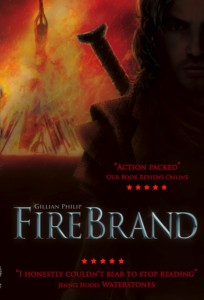
Since I interviewed Seth MacGregor's 'Boss', Gillian Philip, on Scribble City Central back in July, Seth has taken an unsuspecting world by storm.  I described the first part of Seth's memoirs, Firebrand (published by Strident and now in its second printing), as 'rare, new and infinitely exciting', and it seems I am not the only one to be so seduced.  Amanda Craig of The Times has made his book her Top Fantasy Novel of 2010 (Oh! How I agree with you, Amanda!), and Mary Hoffman of The Guardian has just described Seth as 'red-hot' and Firebrand as 'stark and brutal but with moments of heartbreaking beauty'. As of last night (Sunday) Firebrand was at #16 in Fantasy Books on Amazon and at #559 overall.  Cor! And just look at Seth on the cover--who wouldn't want a piece of THAT? *let's all take a moment for fanning purposes here*
Since Seth sneaked onto Twitter (quite against the express wishes of 'The Boss', but then that's our bad, disobedient, authority-defying faery boy all over), he and I have been having some...I shall use the word 'interesting' here (make of that what you will)...conversations. He's given at least two excellent interviews in other places, but for this one I wanted go with the Scribble City tradition by tapping into Seth's mythical faery heritage and trying to delve deeper into the intriguing world behind the Veil.  So without further ado, let's plunge into what I think is a fascinating conversation with the wickedly alluring (and appallingly flirty)...

                                           SETH MacGREGOR

So, Seth...let's begin with 'Faery tales’. That conjures up nice sparkly Thumbelina stuff for little children. But faery tales originate in a much deeper darker space, don’t they? Faery tales first began in the fiery heart of story where the old myths full of blood and ancient magic live. How far back into the mists of myth do your Sithe records go? Who are your lorekeepers? (Or do you not even keep records?)

Yes, blood and ancient magic. I like your style. Faery tales weren’t for children, not to begin with; they were the soap opera of the ancients, told for adults, full of truths and hard reality. And you and I know that however they’ve twisted and turned with the centuries, however they’ve changed, they began in that reality.

Our records go back as far as yours, I think... the further back you go, the more obscured they are by time. We keep the same stories, but like any myth or fairytale, we have our own take on them, our own filter. Full-mortals feature in our tales, but in not quite the same light as they do in yours. Your reputation with us is as mixed as ours with you. And like you, we have books, songs, oral history... there’s always a Shenachie to tell tales on a dark night when everyone’s had more than enough to drink*.
* That'll be pretty much every night, then?


Your brother, Conal is described as ‘heroic’, but you’ve been called ‘half-feral, a bastard boy full of hatred.’ I think that only shows the surly outer armoured skin you have presented to the world so far. There’s someone much more complex underneath all the angry posturing of your younger self, and I’d like to know more about how you would describe yourself nowadays, as compared to in your childhood. Do you, perhaps, see yourself as a kind of mythic hero (or indeed antihero) figure akin to all those butch Greek demigods like Achilles, or do you feel more comfortable closer to home, with heroes like Fionn mac Cumhaill and Cúchulainn—or do you feel like none of them?

I’m blushing** at the very thought of Achilles and Cuchulainn. Hell, I’m not the legendary type, though I love those heroes. They always seem so much larger than life, Lucy, and I’m just... life-sized. I know they had their human frailties, and it’s true I can throw a temper with the best of them, and have been known to sulk in my metaphorical tent... but consorting with gods isn’t for me. Fionn is a little different, isn’t he? He’s closer to us all, more man than demigod, and I like that he had wits as well as strength. More Odysseus than Achilles. I can also vouch for his existence, since Griogair knew him (Aonghas and Reultan named their daughter after him). Needless to say, I only heard the stories with the rest of the clann. My father never talked to me about him.

As for how I see myself nowadays? I’ve mellowed, or I think I have. I hope I’m smarter and wiser. The Boss says I still have a sizeable chip on my shoulder. Hah! She may know me pretty well, but even she doesn’t understand all my motives, not all the time.
** YES! I made Seth blush! This may be a first....


You and I share a love of animals, Seth.  If you had to choose two mythical creatures from any culture to go into battle with and to guard your left and right sides, who would they be, and why?

I have good friends, and good fighting comrades, but there’s no-one I trust more in battle than Branndair***. I know his head and he knows mine: we’re like extensions of each other. So if I was going to choose two mythical heroes instead, I’d take Bran and Sceolan, Fionn’s hounds, the ones with the hearts of men.
*** Branndair is Seth's wolf companion
 I trust you know the cautionary kelpie tale ‘Myself is Myself’+, Seth? It’s said in most of our old Scots legends that the waterhorses can shapeshift. Is this true of your own roan kelpie, or has something got skewed in the story as it travelled across the Veil? We mortals are easily confused about such things!
+ If any of you Lovely Blog Readers don't know it, it can be found in my Coll the Storyteller's Tales of Enchantment

You’re not the only ones. A lot of stories have got skewed and tangled. There are tales of shapeshifting creatures, and I don’t know if they’re true or not, but my horse isn’t a thing that can mutate. I’ve heard people say that water horses and kelpies are two different things, that kelpies are shapeshifting spirits; but we have always called our horses kelpies (and not all the Sithe can ride them). And then there’s the Brollachan, another shapeshifter that’s been known to take the form of a horse.

You ask me, I think tales shapeshift more easily than creatures. I’m not sure you have stories about the Lammyr, do you? Yet there are plenty of them over in your world, taking protégés all the time. Perhaps you notice them even less than you notice us.


In the shamanic tradition it is taught that everyone has a spirit animal (mine is a bear) with which they share affinities. Your true name, Murlainn, as well as symbolising the swift and deadly falcon spirit within you, set off all sorts of mythological echoes for me, being, of course, the same as the great Arthurian wizard of my own culture. Do you think that that Merlin too might have had Sithe blood, or even been a Sithe? Is he someone the Sithe know about?

A bear? That’s lovely. It suits you, because you’re beautiful and have a soft exterior+++, but you can be fierce. I like my true name well enough; it could have been worse. I’ve overheard bitchy comments in the dun before now, like the tosser who said he’d no idea there wasn’t a Gaelic word for ‘snake’. Breaking his nose was a satisfying moment.

And yes, I’ve had full-mortal friends who mistook my name for the wizard’s, and that has sometimes been helpful. I don’t doubt the man had Sithe blood, though I don’t think he was all Sithe: there’s definitely something else there. Didn’t he live backwards through time? Some of his abilities were undoubtedly Sithe, and he had plenty to do with us, or so I hear.

I don’t like the Sidhe of your BBC Merlin. They’re nothing like us. I spend Saturday nights shouting at the Boss’s TV. She gets cross and tells me to shut up, because all she wants to do is drool over Arthur and his knights^ – even though they’re terribly slow with a blade.
+++The less said about how Seth knows this, the better.
 ^You're very mean, Seth. 'The Boss' needs her downtime, just like the rest of us.  If she wants to drool over slow knights, let her (there's even a  free BBC picture below specially to distract her).  The rest of us will drool over slow nights with a certain faery...Oops! didn't mean to say that. Delete delete delete!

When I wrote my own book of Celtic myths and legends, my storyteller set off from the stone circle at Callanish on the the Isle of Lewis (Eilean Leodhas). There are so many stones and circles in Scotland, and they’re pretty much all associated with the Otherworld in some way—generally with mortals wandering through and then coming back tens or hundreds of years later (as you know, to your cost). You’ve told us that there are rings of ancient stones in the Sithe lands too. Do they equate exactly with the ones in the mortal landscape? Is the Veil thinner or somehow more penetrable around them—and if so, why?

Oh, I’m sure that’s true, that the Veil is thinner in those places. You can feel it, can’t you? And not just in the stone circles – there are other rocks, streams, caverns where the other world seems very close. I think of places like Colonsay, or Gigha, or Tomnahurich Hill in Inverness, or the older places of Edinburgh. And I know, for instance, that the Veil is denser and less penetrable around duns and fortresses, so why wouldn’t it work the other way?

Still, full-mortals can’t just wander through, say, a watergate – you’d need someone of Sithe blood with you. That’s why there are all those tales of musicians or knights or midwives enticed through by some unscrupulous Sithe with a few coins or a convincing story.

Some of those stones have equivalents in the full-mortal world, some don’t. I suppose it depends on whether they have been moved or destroyed, or preserved, and why they were built in the first place – some were put there as markers for weak places in the Veil, which makes sense when you think of their atmosphere.

There are a few stone circles in your world I have special affection for. The place my sons are buried, for one. And another where – well. That’s a story for another time^^.
^^You're very good--I had hoped to tempt you into some revelations, but you're too canny for that
.


You faeries are burdened with the hideous Lammyr (which, incidentally, creep the flesh off my bones). They’re obviously pretty hard to get rid of, and I certainly wouldn’t want to meet one on a dark or any other night. We mortals think about a lot of scary things in our spare time—including vampires and werewolves. Do the Sithe have any experience of those—and if you yourself met either one, how would you deal with them?

I suppose our closest equivalent to your seductive bloodsucking destroyers would be our dear Queen. And I’d like to say the Lammyr are undead creatures, and alien to the Sithe, but unfortunately they live and breathe and we are related. At some point in the past we have to accept responsibility for them. Maybe they creep the flesh off their own bones, who knows? It would explain the way they look.

But werewolves – now, we don’t have shapeshifters, but I know that the Sithe have always had a close relationship with our wolves, just as we have with the ravens. (And of course, wolves and ravens have always had a symbiotic relationship, too, even in your world.) Not that I’m fond of my stepmother’s ghastly bird, I might add; that thing’s got it in for me.

Perhaps the werewolf legends came about in the same way the centaur ones did? A full-mortal sees a Sithe and a wolf working together, just as the ancients saw a man on a horse, and.... ah, but on the other hand, there’s every chance werewolves and centaurs are as real as the Sithe, isn’t there? We don’t know everything of every world.^^^
^^^ Interesting.  So you admit there ARE other worlds....


In these modern times, we mortals have started seeing a lot of what are known to us as ‘urban faery tales’—stories about the Sithe, taken down by people probably not unlike The Boss. Many of them are set in the United States, and feature what seem to be some of your very distantly related kinfolk. Would you ever get on an aeroplane and travel across the Atlantic—or would you prefer to take a boat instead? Can you yourself go very far from the Veil—or can you get back to Sithe lands from anywhere in the mortal world?

Oh, I have travelled across the Atlantic, many times. I was in Antigua only recently #...but again, that’s a story for another time. To be honest, I prefer boats to planes, but I’m not as frightened of flying as the Boss is.

The Sithe certainly have kin in the United States, but then we have family everywhere – I’ve known Sithe from Germany, Belgium, Norway, Chile, South Africa and Pakistan. Some of those have different names, of course, but we’re all one race. Watergates exist in all countries; the Sithe world exists alongside yours in its entirety. I can go any distance from the Veil, any of us can – but I would never want to be too far from a watergate. You know how homesick I get.
# and there you go again with the enticing hints....


Now, finally (and this is a complete indulgence on my part), I just have to know the answer to this: 'The Boss' apparently has huge trouble controlling you and your urges, or so she tells me. You’re a kind of mega-flirt legend on Twitter already, and you have hordes of swooning female fans already (of whom I am obviously Most Important Number One, whoever might dispute that fact). So tell us, what would be your ideal night out with a lady in the mortal world of today (no expense spared)? Details, man, details!

All the details? Are you sure, Lucy? I’m not sure the Boss would allow that...!##

OK, but seriously... it would involve music, live music. And dancing. And down to the beach afterwards, to ride my horse together by moonlight and (probably) sober up. And then – oh, don’t talk to me about sand. It gets everywhere.

## I have a nasty feeling 'The Boss' has had her red censor pen out when she was transcribing this.  She has a very Puritan Streak when it comes to your extracurricular activities, does Gillian. *sigh*.
Well, that's all we have time for right now.  Thanks to the gorgeous Seth, (and to Gillian 'The Boss' Philip) for transcribing Seth's messy notes.  I'm just off for a cold shower and a lie down. 

You’re a wonderful interviewer as well as lovely, Lucy. Thank you!

Friday, 6 August 2010

Mythic Friday Interview Number 18 - Steve Feasey

If I needed any piece of arcane knowledge on lycanthropy, guess who I'd go to?  Yep.  Steve Feasey.  Why? Because Steve has written a series of the most original teen werewolf novels I've ever read, and his encyclopaedic knowledge of dark monsters (mostly vile and horrible things that go bump in the night and rip your head off) is second to none.  I first met Steve in a very literary setting--The Eagle and Child pub in Oxford where Tolkien and his fellow Inklings met to talk and drink.  I like to think that we carried on the literary tradition--certainly we talked about books all night. We also talked about werewolves, with the result that I went straight home and bought the first in Steve's Changeling series (Wereling in the USA).  I fell for Trey Laporte, his reluctant werewolf, at once, and I can absolutely understand why teenagers queue up to buy these books.  I've read all the Changeling novels now (and can't wait for Demon Games, the 4th in the series, which is published on 3rd Sept in the UK).  Not only do Steve's books have werewolves in them, they also have vampires--plus a series of really excellent invented denizens of the Netherworld (I particularly like the Necrotroph), and the adventure rocks along in a way that has you turning pages quicker than a Draugr's revenge.  I knew Steve would give us a great Mythic Friday Interview--and he hasn't disappointed one little bit.  Welcome to Scribble City Central, Steve--and over to you for some marvellous mythic answers (I'm SO with you on Dionysus and the Hangover Cure, by the way!).

1. Do you think that the retelling of myths is important or relevant for the children of today? Why should they care about some “dry old stories” which come from ancient or forgotten cultures they might never even have heard of?
Who couldn’t like the great action/adventure yarns that are the ancient myths and legends? Okay, some of the characters are annoyingly flawed to the point that they make you want to scream: “Now whatever you do, don’t open that box. Got it? DON’T open the box.” Whoops. But even the ninnies like Pandora and Icarus still hold great appeal for younger readers.

2. What age were you when you came across your first myth or myths? Tell us how you felt then about the myths you first discovered. Did you love them or hate them? Did they scare you, excite you—or were you indifferent? What kind of myths were they? Greek? Norse? Native American? Celtic? Or from another culture entirely? Were they in a book you read? Or did you hear them as oral storytelling from someone else?
I discovered Greek mythology when I was about ten years old. I would borrow books from the library and read them over and over, and I remember being quite annoyed that the Romans nicked all of the Greek gods and tried to pass them off as their own. How dare they?

Later on I discovered the Norse legends, but they never had quite the same appeal as those early Greek stories.

3. Looking back, what is your favourite myth of all time, from any culture? And why would you choose it?
I used to adore the stories of Heracles (Hercules? Who he?) and his twelve labours (although when you consider the reason he was set them in the first place is to atone for infanticide, it takes some of the shine off of the tale). The depictions of the demi-god draped in his lion skin, and wielding his club is just too delicious for a young, impressionable boy. I particularly liked the way that Heracles was so dismissive of the gods, not kowtowing to them in the way they wanted him to. He wasn’t above a bit of skullduggery when he thought he could get away with it either, like when he tricks Atlas into taking the world back onto his shoulders.

But if I’m honest, I think the real appeal of Heracles to me as a young boy was the slaying of all those terrible monsters. Fabulous stuff!

4. Who is the mythical being you most dislike, and what made you feel that way about them?
As a young reader, I remember taking a dislike to the rather heartless elfin blacksmith, Volund, of Norse mythology. I know he was dealt a rather harsh hand by the dastardly Nidud the Cruel (who hamstrings him and imprisons him on an island to either work or starve), but I felt his own callous treatment of the king’s daughter and the murder of the young princes was rather unseemly.

5. Is there a mythical beast you are particularly fond of? If so, which one?
My son, who is also mad about the Greek myths at the moment (thanks to the Percy Jackson books), asked me this question the other day. I answered that the Lernean Hydra was my favourite. I explained that this was because there had been a picture in one of my books about Greek mythology, depicting Heracles frantically lopping heads off of the beast with one hand whilst wrestling more heads with the other hand. It was rather gruesome (which is probably why I liked it so much).

I’m naturally a big fan of werewolves, and during school visits I often tell the myth of King Lycaon who was cursed to become a wolf after feeding human flesh to Zeus. The first lycanthrope.

6. Finally, how have myths had an influence on your writing life, if at all? 
Most of the horror creatures that feature in the Changeling books are the stuff of myth and legend. When I was researching for the books I was surprised at just how old some of these stories were, and how our western portrayal of creatures like vampires differs so radically from the original descriptions of ‘gas-filled, bloated, purple-coloured, undead creatures that stank of decay and the earth that they had to bury themselves in each night’. About as far away from Edward Cullen and the other Twilight vamps as you could imagine!

In addition to the classic horror tropes, I had to invent a huge number of nether-creatures to populate my own version of Hades, and there is little doubt that my early love affair with Greek mythology and the wonderful monsters contained in those tales helped me no end in this.

7. If you could choose to be the demigod child of any one mythical god or goddess, which one would it be? Which power would you like to inherit from them—and what would you do with it?
Dionysus. I bet he threw a great party, and I have no doubt that he would have the ultimate hangover cure – and I’m talking a hangover CURE. Now a person could make a lot of money with something like that….

More about Steve:
Steve  lives with his family in Hertfordshire, UK, (where he sometimes hears a strange and unidentifiable howling just after midnight). He coaches under-8s rugby and likes to win! He's passionate about reading and spends a lot of time visiting schools, talking about Changeling, his favourite books, the best horror movies ever and his next series, which will launch in Spring 2011.  Steve started writing relatively late, in his 30's, and the Changeling series of books are his first venture into teen fiction.

Steve's website is at: http://stevefeasey.com/
His blog is at: http://rantsteverant.blogspot.com/

His Facebook Fan Page is HERE and you can also follow @stevefeasey on Twitter


Blog Design by Imagination Designs all images from the Before the First Snow kit by Lorie Davison